Are Saturn's rings the remains of a moon that shattered 100 million years ago?
Lost moon ‘Chrysalis’ hypothesis simultaneously explains Saturn’s tilt and young rings

- •Research has revealed that Saturn's rings may be the remains of the satellite Chrysalis that was shattered about 100 million years ago.
- •This hypothesis simultaneously explains two mysteries: Saturn's 26.7-degree tilt and the young age of its rings.
- •Computer simulation results confirmed the possibility that the satellite's icy mantle may have peeled off to form a water ice ring.
The tragic end of a satellite that disappeared 100 million years ago
A new study has revealed that Saturn's iconic rings may actually be the remains of a long-lost satellite. At the Lunar and Planetary Science Conference held in Texas, USA, Yifei Jiao's research team at the University of California, Santa Cruz suggested the possibility that a hypothetical satellite called 'Chrysalis' was torn apart by strong tidal forces when it came too close to Saturn about 100 million years ago.
According to the research team, as Chrysalis' icy outer layer peeled off, some fragments remained in Saturn's orbit, which collided and spread to form the complex ring system we observe today.
The key to solving two mysteries
The reason this research is attracting attention is because it can simultaneously explain two long-standing mysteries surrounding Saturn. The first is the tilt of Saturn. Saturn is tilted about 26.7 degrees, which scientists have assumed is related to its gravitational resonance with Neptune. Chrysalis played a role in maintaining this alignment as it orbited Saturn for billions of years.
The second is the age of the ring. Saturn formed more than 4.5 billion years ago, but its rings appear much younger. “This scenario can clearly explain why Saturn’s rings are young,” Zhao said in the presentation.
Birth and development of the Chrysalis hypothesis
This study elaborates the hypothesis proposed by Jack Wisdom's research team at the Massachusetts Institute of Technology (MIT) in 2022. Studies at the time estimated that Chrysalis' orbit became unstable 100 to 200 million years ago, and after a series of gravitational interactions, it had a fatal close encounter with Saturn. The explanation is that most of the satellites were destroyed or fell to Saturn, but some fragments remained in orbit and became raw materials for the rings.
Zhao's research team modeled this decomposition process in detail through computer simulation. The results showed that Saturn's tidal forces preferentially stripped away the moon's icy mantle, leaving much of the rocky core intact. This distinction naturally explains why Saturn's rings are composed almost entirely of water ice and have very little rock.
The role of Titan and the evolution of the ring
The research team also analyzed that the fallen material was formed by gravitational interaction with a large satellite such as Titan. This process may have removed up to 70% of the initial ring mass, making the original ring system likely many times more massive than it is today.
“We don’t know if there were rings before this event,” Zhao told Space.com. “Even if they weren’t, this scenario could produce an ice-rich ring system consistent with Saturn’s current ring mass.”
Future outlook [AI analysis]
Scientists are continuing to study what ultimately happened to the surviving core of Chrysalis and whether debris from this event left traces elsewhere in Saturn's system. In particular, there is a possibility that abnormal impact traces that may remain on icy satellites may be discovered by future probes.
If the Chrysalis hypothesis is supported by additional evidence, it could fundamentally change our understanding of not just Saturn's history, but the mechanisms of moon and ring formation throughout the solar system. It is likely to be another example of how planetary systems dynamically change over billions of years.
댓글 (3)
Are에 대해 더 알고 싶어졌습니다. 후속 기사 부탁드립니다.
기사 잘 봤습니다. 다른 시각의 분석도 읽어보고 싶네요.
간결하면서도 핵심을 잘 정리한 기사네요.
More in Life

Artemis 2 astronauts arrive at Kennedy Space Center... The first manned lunar exploration in 52 years is imminent.

NASA Artemis 2 scheduled to launch into lunar orbit on April 1

Burger King launches ‘Peppercorn BLT Whopper’ created with fan idea

NASA unveils 'Blue Marble' award categories in environment and energy fields

Soothe yourself with LEGO while waiting for Star Wars Ahsoka Season 2, now 20% off

Can humans give birth to babies in space? Science Reveals Unexpected Challenges
Latest News

Middle East War Reaches One-Month Mark, Weekend Critical for Talks or Ground War
Middle East war from US-Israel-Iran strikes enters 27th day

ASEAN Summit to Proceed in Philippines in May Despite Middle East Conflict, Scale Reduced
ASEAN summit confirmed for May in Philippines despite prolonged Middle East conflict

Court Suspends Detention of Unification Church Leader Han Hak-ja, Temporary Release Until Next Month 30th
Court decides to suspend detention of Unification Church leader Han Hak-ja

People Power Party Strongly Criticizes President Lee's Cheonan Ship Remarks
People Power Party strongly criticizes President Lee Jae-myung's Cheonan-related remarks

Malaysia-Indonesia Leaders Hold Emergency Talks on Middle East War Response
Malaysian PM Anwar and Indonesian President Prabowo held emergency talks in Jakarta
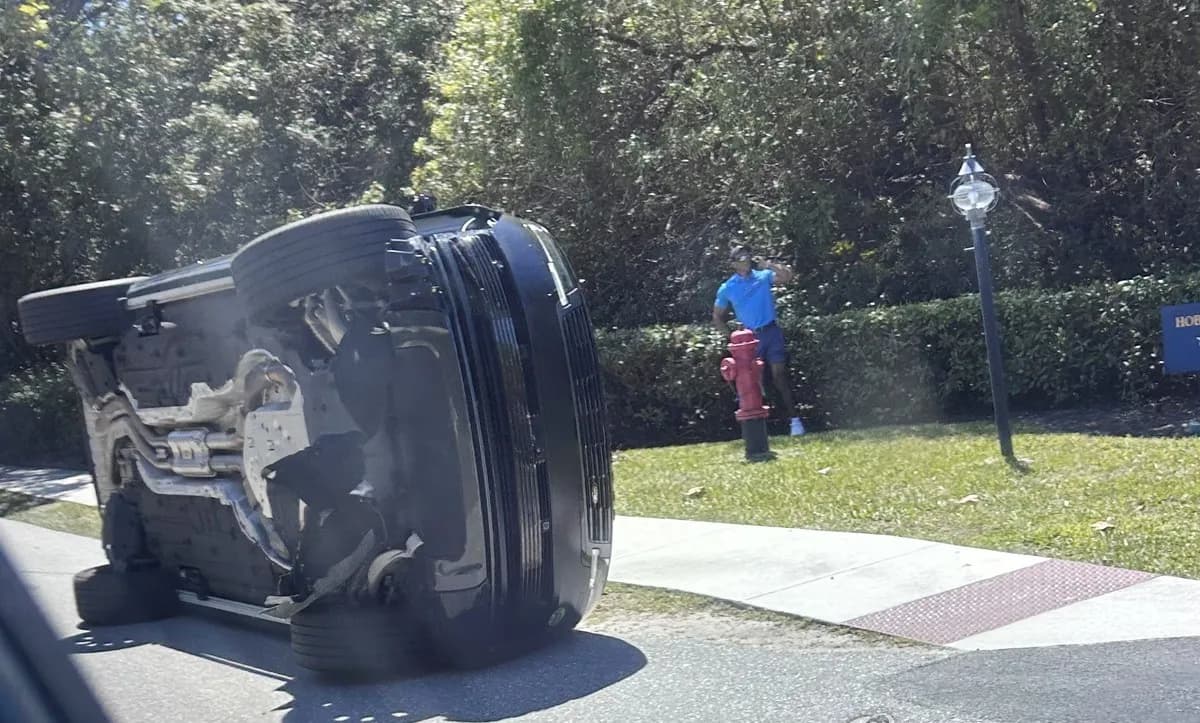
Tiger Woods Arrested for DUI Just 3 Days After Comeback—Fourth Vehicle-Related Incident
Tiger Woods arrested for DUI just 3 days after comeback

UK University Meningitis Outbreak: Worst Over but Concerns Remain About Recurrence
UK university meningococcal outbreak worst appears over, but cause remains unclear

Yen/Dollar Rate Breaks Through 160 Yen for First Time in 1 Year 8 Months Amid US-Iran War
Yen/dollar rate breaks through 160 yen for first time in 1 year 8 months amid US-Iran war