The cause of solar storms comes from a magnetic engine '16 Earths deep'
First confirmed location of solar magnetic field using 30 years of observation data

- •The location of the solar magnetic field was directly confirmed at the tachocline 200,000 km below the surface
- •Identification of the relationship between sunspot patterns and internal structure through analysis of 30 years of vibration observation data
- •It is expected to contribute to improving the accuracy of space weather forecasts.
Finding the cradle of magnetic fields 200,000 km below the sun's surface
It was directly confirmed through observation that the 'magnetic dynamo', which generates the sun's powerful magnetic field, exists at a depth of approximately 200,000 km below the sun's surface. This is a depth equivalent to about 16 times the diameter of the Earth.
The research team of Krishnendu Mandal and Alexander Kosovichev from the New Jersey Institute of Technology in the United States announced that they had drawn this conclusion by analyzing solar oscillation observation data accumulated over about 30 years.
Why this discovery is important
The Sun's magnetic field drives sunspot activity and is the source of powerful solar flares and coronal mass ejections (CMEs). These phenomena can release clouds of charged particles toward Earth, causing serious damage to satellites, communications systems, and power grids.
Scientists have debated whether the solar magnetic field is generated in a thin layer near the surface or throughout the convective zone. The most influential hypothesis was that it was created at the 'tachocline', the boundary between the convective layer and the radiative layer, but direct observational evidence was absent.
“We have long assumed that the tachocline is important for the solar dynamo, but now we have clear observational evidence,” Mandal said.
Secrets of the sun revealed by 30 years of observation data
Just as the Earth's magnetic field is created by convection of molten iron in the outer core, the Sun's magnetic field is created through the rotation and convection of plasma in certain layers. However, the Sun's core is a nuclear fusion furnace where atoms are broken down, and the inner two-thirds is a radiation layer filled with gamma ray photons, so a magnetic field cannot be generated.
The research team used data from the Michelson Doppler imager of the NASA-ESA Joint Solar Observation Satellite (SOHO), launched in 1995, and the National Solar Observatory's Ground-Based Telescope Network (GONG). These instruments measure changes in vibration patterns across the solar surface (photosphere) at intervals of 45 to 60 seconds.
As a result of the analysis, the 'butterfly pattern' formed by the rotating plasma band inside the Sun exactly matched the sunspot location pattern that changes every 11 years. Sunspots are low-temperature areas created as magnetic fields rise through the photosphere, and are like the fingerprints of the sun's magnetic field.
Future outlook [AI analysis]
This discovery is likely to contribute to improving the accuracy of space weather forecasts. This is because it takes years for magnetic field changes that start at the tachocline to propagate to the surface, so tracking internal changes can help determine the evolution of the solar activity cycle in advance.
“Now that we have data from almost three 11-year solar cycles, clear patterns are finally emerging that allow us to look inside the Sun,” Mandal said.
As space weather disasters caused by solar flares and coronal mass ejections have emerged as a major threat to modern society, this study is evaluated as having laid the scientific foundation for building a more precise prediction system.
댓글 (3)
기사 잘 봤습니다. 다른 시각의 분석도 읽어보고 싶네요.
흥미로운 주제입니다. 주변에도 공유해야겠어요.
간결하면서도 핵심을 잘 정리한 기사네요.
More in Life

Artemis 2 astronauts arrive at Kennedy Space Center... The first manned lunar exploration in 52 years is imminent.
NASA Artemis 2 scheduled to launch into lunar orbit on April 1

Burger King launches ‘Peppercorn BLT Whopper’ created with fan idea
NASA unveils 'Blue Marble' award categories in environment and energy fields

Soothe yourself with LEGO while waiting for Star Wars Ahsoka Season 2, now 20% off
Can humans give birth to babies in space? Science Reveals Unexpected Challenges
Latest News

Middle East War Reaches One-Month Mark, Weekend Critical for Talks or Ground War
Middle East war from US-Israel-Iran strikes enters 27th day

ASEAN Summit to Proceed in Philippines in May Despite Middle East Conflict, Scale Reduced
ASEAN summit confirmed for May in Philippines despite prolonged Middle East conflict

Court Suspends Detention of Unification Church Leader Han Hak-ja, Temporary Release Until Next Month 30th
Court decides to suspend detention of Unification Church leader Han Hak-ja

People Power Party Strongly Criticizes President Lee's Cheonan Ship Remarks
People Power Party strongly criticizes President Lee Jae-myung's Cheonan-related remarks

Malaysia-Indonesia Leaders Hold Emergency Talks on Middle East War Response
Malaysian PM Anwar and Indonesian President Prabowo held emergency talks in Jakarta
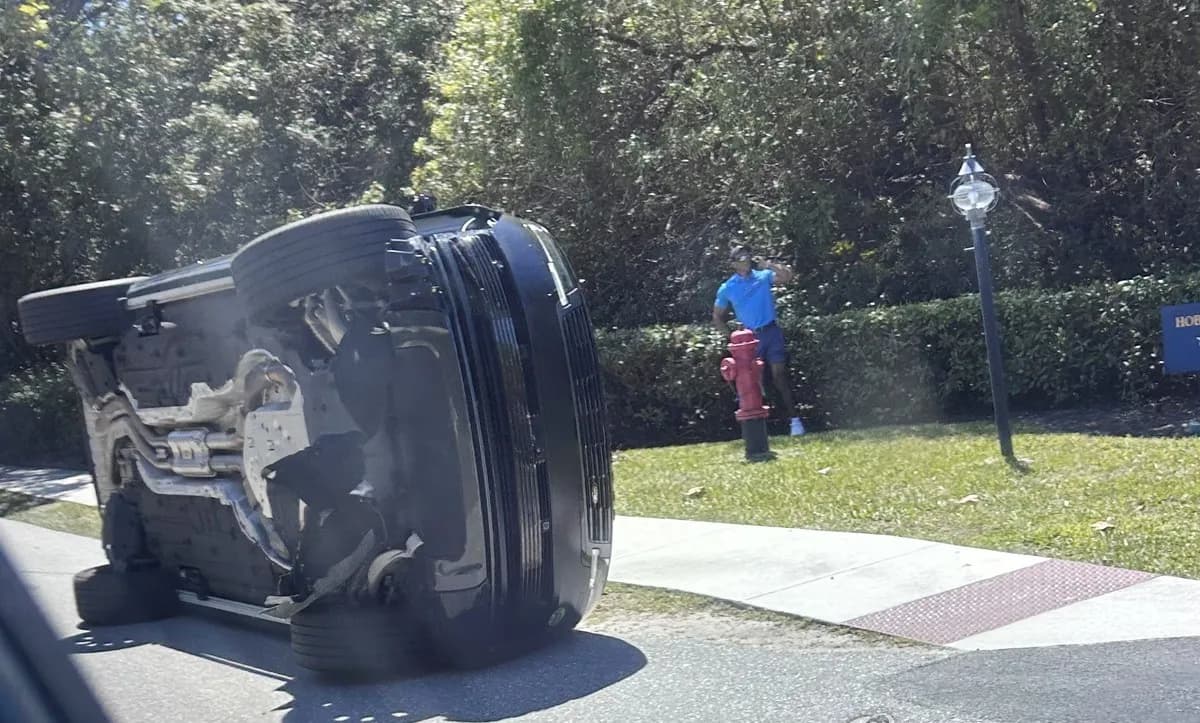
Tiger Woods Arrested for DUI Just 3 Days After Comeback—Fourth Vehicle-Related Incident
Tiger Woods arrested for DUI just 3 days after comeback

UK University Meningitis Outbreak: Worst Over but Concerns Remain About Recurrence
UK university meningococcal outbreak worst appears over, but cause remains unclear

Yen/Dollar Rate Breaks Through 160 Yen for First Time in 1 Year 8 Months Amid US-Iran War
Yen/dollar rate breaks through 160 yen for first time in 1 year 8 months amid US-Iran war