Saudi Arabia's Riyadh Launches Autonomous Vehicle Pilot Project
12-Month Trial Connecting 7 Key Locations Including Airport at Speeds up to 100 km/h
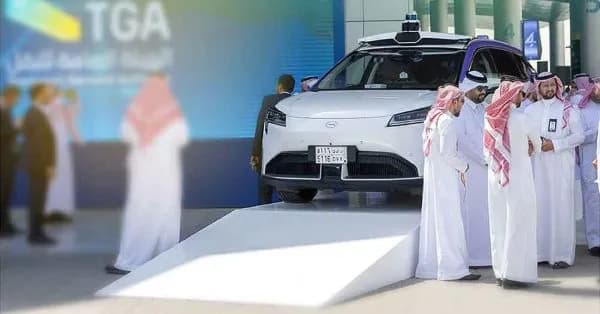
- •Riyadh, Saudi Arabia, is piloting autonomous vehicles at seven locations including the airport for 12 months.
- •Global companies including AiDriver, WeRide, and Uber are participating, with vehicles traveling at speeds up to 100 km/h.
- •The project aims for 30% transportation cost reduction and carbon emission cuts, targeting commercialization by 2030.
Middle East's First Urban Autonomous Driving Commercialization Experiment
Riyadh, the capital of Saudi Arabia, has begun the real-world deployment of autonomous vehicles. The Saudi Transport Authority announced on the 26th that it will pilot autonomous driving services connecting seven major locations in Riyadh for 12 months.
This project connects key areas including King Khalid International Airport through 13 stops, with autonomous vehicles traveling at speeds up to 100 km/h. The Saudi government has designated this as "the Kingdom's first autonomous driving demonstration project" and positioned it as a key milestone in the national transportation and logistics strategy.
Partnership with Three Global Companies
Three autonomous driving specialist companies—AiDriver, WeRide, and Uber—are participating in the project operations. They will collect real-world road environment data and improve their algorithms within the Regulatory Sandbox established by the Saudi government.
The Saudi Transport Authority stated, "The goal is not simply to operate vehicles, but to build an autonomous driving system that reflects the unique traffic patterns and climate conditions of Middle Eastern cities." Riyadh's hot, dry climate, rapid urban expansion, and diverse road types are considered challenging conditions for autonomous driving technology validation.
Economic Impact: Cost Reduction and Industrial Ecosystem Development
The Saudi government has outlined four economic objectives through this project.
1. Enhanced Operational Efficiency
Reducing logistics and passenger transport costs through driver labor savings and traffic flow optimization. The Transport Authority projects that "once the autonomous driving system is established, urban traffic operating costs can be reduced by up to 30%."
2. Development of Local Technology Industry
Creating an environment where Saudi AI and robotics companies can develop their own solutions using demonstration data. This directly aligns with the technology independence goals of Vision 2030.
3. Investment Attraction
The symbolic significance of being the Middle East's first large-scale autonomous driving project is attracting interest from global mobility companies and venture capital. Saudi Arabia has established a $20 billion fund for autonomous driving and electric vehicles since 2024.
4. Carbon Emission Reduction
Reducing greenhouse gas emissions in the transportation sector through optimal route driving and electric vehicle integration. Saudi Arabia has declared carbon neutrality by 2060.
Competitive Landscape: Middle East Smart City Leadership Competition
Saudi Arabia's move is interpreted within the context of technological competition with the United Arab Emirates (UAE). The UAE is already operating limited autonomous shuttles in Dubai and Abu Dhabi, with a goal to convert 25% of transportation to autonomous driving by 2030.
| Category | Saudi Riyadh | UAE Dubai |
|---|---|---|
| Operating Scale | 7 locations, 13 stops | 3 zones, small-scale shuttles |
| Maximum Speed | 100 km/h | 40 km/h (restricted zones) |
| Participating Companies | AiDriver, WeRide, Uber | Cruise, EasyMile |
| Project Duration | 12-month demonstration | Continuous operation (pilot) |
| Objective | National transport integration | Tourism and exhibition-focused |
The Riyadh project emphasizes practicality over Dubai in two aspects: airport connectivity and high-speed driving. Meanwhile, the UAE focuses on tourist experiences and international event promotion.
Historical Context of Middle East Autonomous Driving Market [AI Analysis]
Autonomous driving investments by Middle Eastern countries began as part of economic diversification strategies to reduce oil dependency in the late 2010s. The UAE first announced its autonomous driving strategy in 2016, and Saudi Arabia designated autonomous driving as core infrastructure through the NEOM smart city project revealed in 2017 as part of Vision 2030.
Following the COVID-19 pandemic in 2020, the surge in contactless logistics demand accelerated autonomous driving technology adoption. In 2023, Saudi Arabia invested $100 million in Chinese autonomous driving company WeRide, formalizing technology cooperation. The current Riyadh project represents the transition to the deployment phase as an extension of this trajectory.
Future Outlook: Commercialization Potential by 2030 [AI Analysis]
If the 12-month demonstration concludes successfully, the Saudi government is likely to expand services throughout Riyadh starting in 2027. Particularly between 2028 and 2030, when NEOM City construction enters full swing, autonomous driving is expected to establish itself as a primary mode of transportation.
However, several variables exist. First, verification is needed to ensure sensor and battery performance remains stable long-term in high-temperature environments. Second, AI learning regarding Riyadh's complex intersections and irregular traffic patterns (lane violations, sudden lane changes, etc.) is crucial. Third, local drivers' and pedestrians' acceptance will influence commercialization speed.
If Saudi Arabia secures sufficient data from this project and demonstrates safety, it has the potential to preempt Middle Eastern autonomous driving market standards while emerging as a strategic hub for global mobility companies.
댓글 (4)
Saudi 소식 반갑습니다. 앞으로가 더 기대됩니다.
오랜만에 기분 좋은 뉴스를 접했습니다.
관계자분들의 노력에 박수를 보냅니다.
동의합니다. 앞으로가 더 기대됩니다.
More in AI & Tech

Reddit Considers Face ID to Block Bots While Maintaining Anonymity
China Reduces Hypersonic Missile Core Technology Simulation to 7 Days

BTS Gwanghwamun Concert: AI Network Prevents Communication Crisis for 40,000 Fans
Czech Drone Factory Fire Under Investigation for Terrorism

Trump Slams NATO Allies as 'Cowards' Over Strait of Hormuz Refusal

Google Unveils Gemini 3.1 Flash-Lite Optimized for High-Volume Processing
Latest News
이스라엘, 헤즈볼라 무기 통로 레바논 다리 공습
이스라엘군, 헤즈볼라 무기 통로 레바논 다리 공습
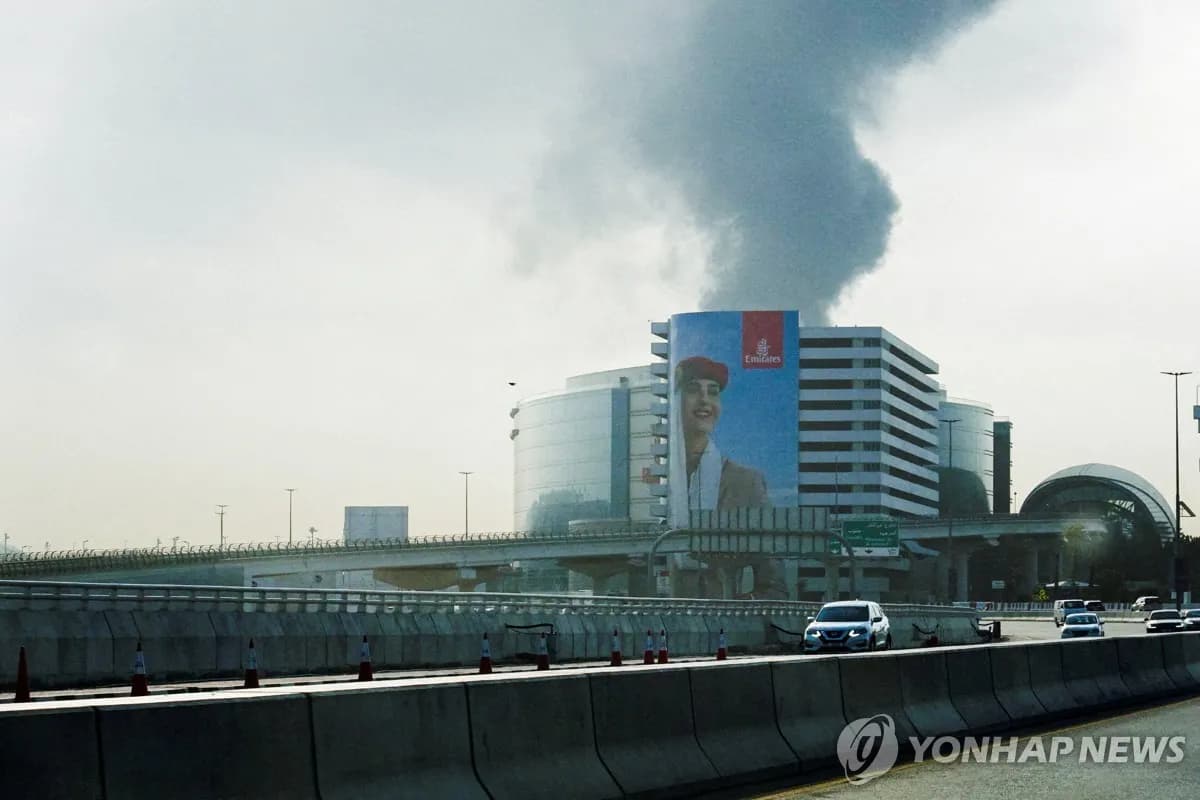
중동행 전세기 전쟁보험료 최고 7천500만원
중동행 전세기 전쟁보험료가 최고 5만달러(7천500만원)로 상승

이란 탄도미사일, 이스라엘 방어망 뚫고 160명 부상
이란 탄도미사일이 이스라엘 방공망을 통과해 160명 부상

Middle East Conflict Drives Manufacturing Outlook to 10-Month Low
The Korea Institute for Industrial Economics & Trade survey shows April manufacturing outlook PSI plummeted to 88, falling below baseline for the first time in 10 months.

Lee Jae-myung Administration Excludes Multi-Home Officials from Real Estate Policymaking
President Lee Jae-myung has ordered the exclusion of multi-home owning public officials from all real estate policy processes.

Southeast Asia Growth Forecasts Cut Amid Oil Price Surge, Threatening Korean Exports
Maybank Research has downgraded ASEAN-6's 2026 growth forecast from 4.8% to 4.5%.
Volkswagen CEO Says Germany Should Learn from China's Industrial Strategy
Volkswagen CEO stated that Germany should learn from China's systematic industrial planning approach.

BTS Tops March Artist Brand Reputation Rankings with First Full Group Comeback in 4 Years
BTS ranked first in the Korean Corporate Reputation Research Institute's March Artist Brand Reputation Rankings based on 99 million data points.