Moon exploration 52 years after Apollo, who are the four Artemis 2 astronauts?
First black, female, and non-American lunar orbiters come together
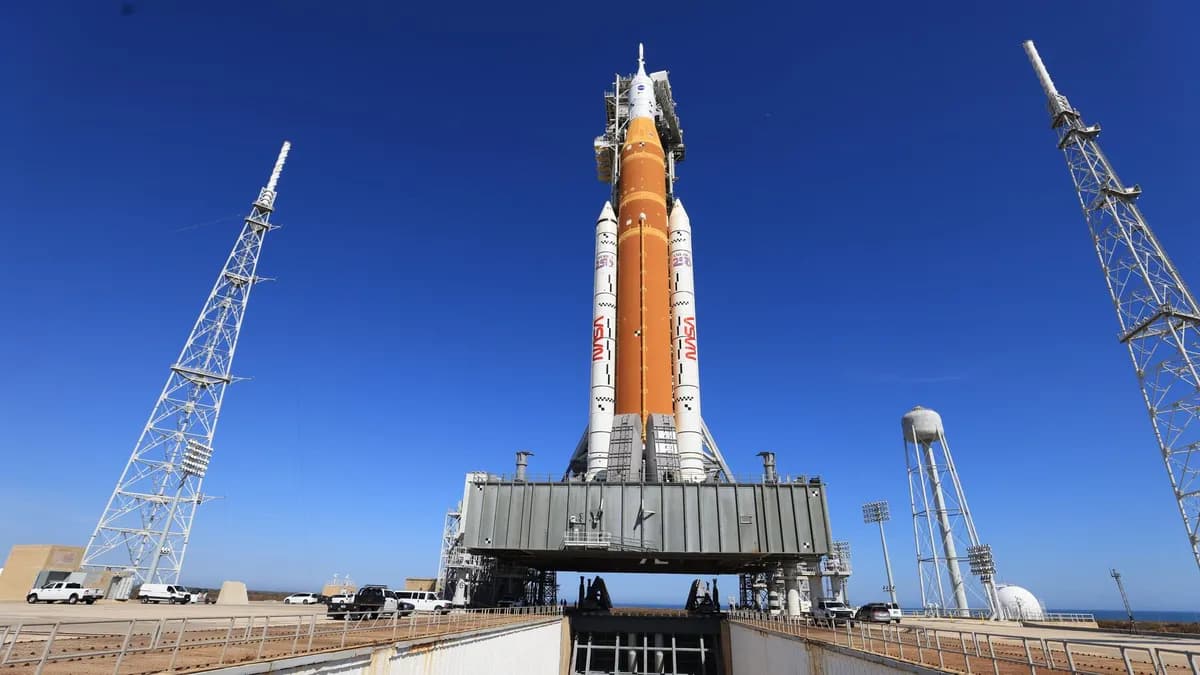
- •The Artemis 2 mission has begun final preparations with the goal of launching on April 1.
- •The first black, female, and non-American lunar orbiters were made up of one team.
- •The first manned deep space flight in 52 years since Apollo 17 in 1972 has been completed.
Humanity heading to the moon for the first time in half a century
On April 1, 2025, humanity will head to lunar orbit again for the first time in 52 years. The four astronauts who will board the Artemis 2 mission have been revealed. The main characters are Reed Wiseman (commander), Victor Glover (pilot), and Christina Koch (mission specialist) from the National Aeronautics and Space Administration (NASA), and Jeremy Hansen (mission specialist) from the Canadian Space Agency (CSA).
They will embark on a journey of approximately 10 days aboard the Orion spacecraft, becoming the first humans to leave low Earth orbit and return to the moon since Apollo 17 in 1972.
Flight attendants writing historic ‘firsts’
Artemis 2 carries symbolic meaning beyond a simple technical test. Victor Glover becomes the first black astronaut to leave low-Earth orbit, and Christina Koch is the first woman to do the same. Jeremy Hansen is the first non-American astronaut to fly into lunar orbit.
This configuration is not accidental. NASA first selected black and female astronauts in 1978, and Canada's first astronauts were not selected until 1983. Three of the Artemis 2 crew members were not even born when the Apollo mission took place. The progress of half a century of space exploration history is condensed in this flight.
From the simulator to the moon: a training routine
Currently, four astronauts are undergoing intensive training at Johnson Space Center in Houston. They are carrying out a tight schedule that includes launch simulation, landing training, adjusting to life aboard the Orion spacecraft, piloting, and conducting scientific experiments. This mission is also a key prelude to the manned lunar landing of Artemis 4, scheduled for 2028.
The meaning of Artemis according to astronauts
Commander Reed Wiseman explained the meaning behind the mission patch. “The Earth in the patch is an intentional reproduction of Apollo 8’s ‘Earthrise’ composition. Some people noticed this online.” He added that the way we look at the moon itself has changed. “I get to imagine how the far side of the moon is illuminated and how the canyons are in shadow. These are things I have never thought about in my life.”
Pilot Victor Glover shared his impressions from the public reaction. "After a recent lecture, someone came up to me and asked, 'Are you really going to go to the moon next year?' I don't know if the world is ready, but something big like this brings people together. “Whether you are sitting comfortably at home, working in a mission control center, or orbiting the moon in a spacecraft—we are all on this journey together.”
From Apollo to Artemis: The historical flow of lunar exploration
In 1968, Apollo 8 became the first to orbit the moon, and in 1969, Apollo 11 became the first human to successfully land on the moon. The last manned lunar exploration ended with Apollo 17 in 1972. For the next half century, the moon was the domain of unmanned exploration vehicles.
In 2017, the United States announced the Artemis program and declared the resumption of manned lunar exploration. In 2022, Artemis 1 successfully completed an unmanned test flight, and now Artemis 2 will take the next step of manned orbital flight. The ultimate goal is to build a sustainable human settlement in the lunar south pole.
Future outlook [AI analysis]
The successful performance of Artemis 2 is likely to have a direct impact on the Artemis 4 lunar landing schedule in 2028. Once the Orion spacecraft's life support system and communication equipment are verified in an actual deep space environment, the technical uncertainty of subsequent missions is expected to be greatly reduced.
Additionally, this mission can strengthen the international cooperation model in space exploration. The participation of Canadian astronauts increases the likelihood of future participation by other countries that have signed the Artemis Agreement. The diversity of crew composition is expected to serve as an opportunity to expand interest in and support for space exploration around the world.
However, the launch schedule may be adjusted depending on the technical inspection status, and there remain unverified variables such as radiation exposure in the deep space environment. Artemis 2 will be a critical test bed for humanity to return to the moon and beyond.
댓글 (3)
Moon 관련 기사 잘 읽었습니다. 유익한 정보네요.
그 부분은 저도 궁금했습니다.
흥미로운 주제입니다. 주변에도 공유해야겠어요.
More in Life

The identity of the 'tentacled alien creature' revealed by a NASA astronaut was a potato

Dogs already existed alongside humans 16,000 years ago... Oldest dog DNA discovered

American man sets Guinness record for visiting 28 Michelin restaurants in 24 hours

Dakota County, USA, holds donation event where mayors are locked in 'escape room'

‘Chesney’, the escaped kangaroo, returns safely after a three-day chase.

A white-haired son taking care of his elderly mother, a ‘non-care’ family story shared by four generations.
Latest News

Oh Se-hoon: "I Would Choose 5th Term as Seoul Mayor Over Presidency"
Seoul Mayor Oh Se-hoon states he would choose 5th mayoral term over presidency

BTS' 'Arirang' Tops Billboard 200 Chart—Seventh No. 1 Album
BTS's new song 'Arirang' achieves No. 1 on U.S. Billboard 200 chart

Three Arrested in Paris After Attempted Bomb Attack Near Bank of America
Three suspects arrested after attempted bomb attack near Bank of America branch in Paris

Three Journalists Killed in Israeli Strike on Southern Lebanon, Hundreds Mourn in Beirut
Three journalists killed in Israeli targeted attack on southern Lebanon

Two Australian States Offer Free Public Transport as Iran War Drives Up Fuel Prices
Victoria and Tasmania implement free public transport in response to fuel price surge from Iran war fallout

Iranian Missile Strikes Israeli Industrial Zone—Major Fire and Hazardous Material Leak
Iranian ballistic missile directly hits southern Israeli industrial zone, causing major fire

Trump Shares Pastor's Letter Amid Month-Long Iran War: "Blessed Are the Peacemakers"
President Trump shares pastor's letter on one-month anniversary of Iran war

African Football Chief Resigns Amid Morocco-Senegal Final Controversy
CAF Secretary General Veron Mosengo-Omba resigns amid Morocco-Senegal final controversy