The Apollo astronauts were in a plastic bag, and the Artemis astronauts were in a ‘private bathroom.’
NASA Artemis 2, first manned flight to the moon in half a century... Space toilet technology also evolves
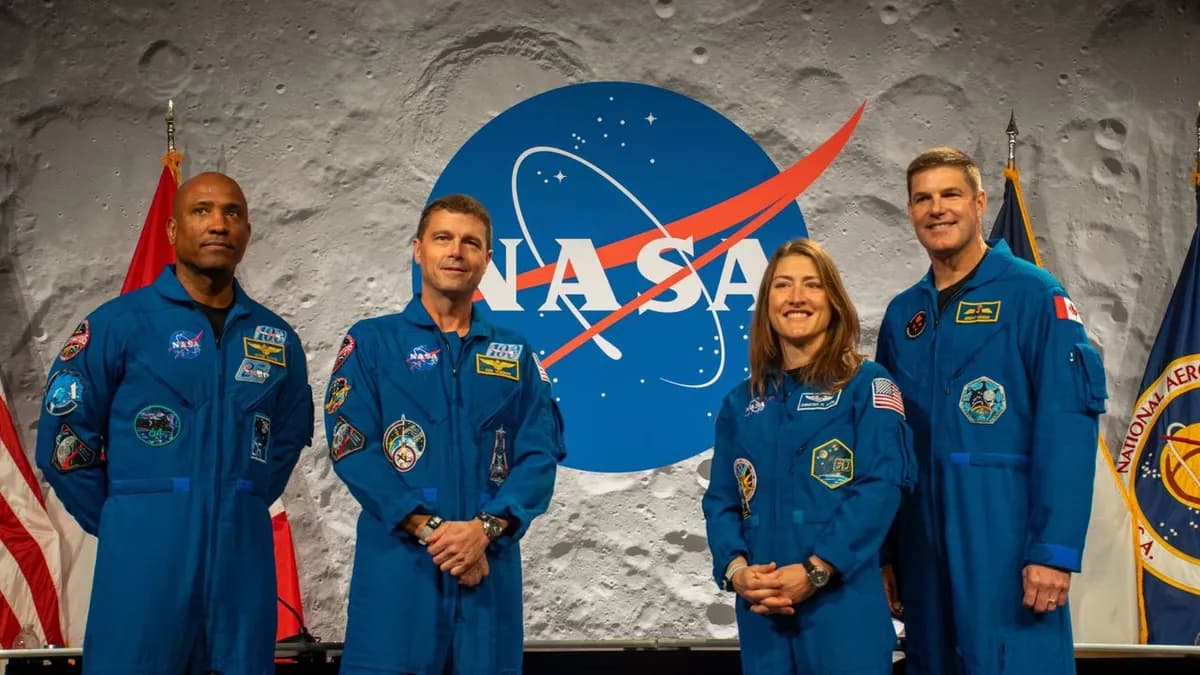
- •Artemis 2 will begin its mission in April to send humans to lunar orbit for the first time in 52 years.
- •During the Apollo era, technology evolved from the plastic bag system to private toilets with doors.
- •A universal waste management system that can be used by both men and women will be put into practical operation for the first time.
First manned flight to the moon in 52 years, bathrooms also upgraded
NASA's Artemis 2 mission is preparing for launch on April 1. This mission is expected to be a historic flight that will send humanity back into lunar orbit 52 years after Apollo 17 in December 1972. Four astronauts embark on a 10-day journey back to the moon aboard the Orion capsule.
What is noteworthy is the development of the living environment inside the spacecraft. During the Apollo era, astronauts had to urinate into a roll-on cuff and dispose of their feces in a plastic bag in front of their colleagues. However, the Artemis 2 crew was able to use a private bathroom with a door.
Small but precious ‘space of your own’
In a video released on YouTube last year, Canadian astronaut Jeremy Hanson said, "I am very lucky to have a bathroom with a door on this small spacecraft," and explained, "It is the only place during the mission where I can feel alone for a moment."
According to Lockheed Martin, which manufactured the Orion capsule, this toilet is about the size of a small airliner's toilet. Considering that the habitable space of the Orion capsule is only about 9.34㎥ (about the size of two minivans), and that four people must live there for 10 days, this is an amazing amount of space secured. For reference, the Apollo Command Module's living space was smaller at 5.95㎥, but only three people were on board at the time.
The bathroom entrance is located at the bottom of the capsule. It may seem strange on Earth, but it is natural in a microgravity environment. “You float, move around, open the hinged door and go inside,” Hanson explained.
Advanced system that can be used by both men and women
Orion's toilet is very similar to the 'Universal Waste Management System (UWMS)' used in the US section of the International Space Station (ISS). During the Apollo era, there were only male astronauts, so simple equipment was sufficient, but this mission also included female astronaut Christina Koch, so a design that could be used by both genders was essential.
UWMS is a structure with a seat on top of the canister and a long, flexible urine hose attached. Each astronaut uses a personal funnel for hygiene purposes. Urine is discharged through a hose using airflow instead of gravity, and is released into space several times a day.
The ISS's UWMS recycles urine and turns it into drinking water, but this function is not needed on Artemis 2, a short 10-day mission. Feces are collected through suction into a bag at the bottom of the canister, and after the canister is replaced several times during the mission, all solid waste is brought back to Earth.
In case of emergency, use the ‘Apollo method’
This is the first actual operation of the Orion toilet. This equipment was not mounted on Artemis 1, which traveled to lunar orbit unmanned at the end of 2022. NASA plans to also install Apollo-era backup equipment, such as emergency urine collection bags, in case of equipment failure.
"If you need more space, you can leave the door open and use a privacy curtain," said Debbie Kos, deputy director of the Orion program at NASA's Johnson Space Center.
댓글 (4)
기사 잘 봤습니다. 다른 시각의 분석도 읽어보고 싶네요.
좋은 의견이십니다.
Apollo에 대해 더 알고 싶어졌습니다. 후속 기사 부탁드립니다.
좋은 의견이십니다.
More in Life

The identity of the 'tentacled alien creature' revealed by a NASA astronaut was a potato

Dogs already existed alongside humans 16,000 years ago... Oldest dog DNA discovered

American man sets Guinness record for visiting 28 Michelin restaurants in 24 hours

Dakota County, USA, holds donation event where mayors are locked in 'escape room'

‘Chesney’, the escaped kangaroo, returns safely after a three-day chase.

A white-haired son taking care of his elderly mother, a ‘non-care’ family story shared by four generations.
Latest News

Oh Se-hoon: "I Would Choose 5th Term as Seoul Mayor Over Presidency"
Seoul Mayor Oh Se-hoon states he would choose 5th mayoral term over presidency

BTS' 'Arirang' Tops Billboard 200 Chart—Seventh No. 1 Album
BTS's new song 'Arirang' achieves No. 1 on U.S. Billboard 200 chart

Three Arrested in Paris After Attempted Bomb Attack Near Bank of America
Three suspects arrested after attempted bomb attack near Bank of America branch in Paris

Three Journalists Killed in Israeli Strike on Southern Lebanon, Hundreds Mourn in Beirut
Three journalists killed in Israeli targeted attack on southern Lebanon

Two Australian States Offer Free Public Transport as Iran War Drives Up Fuel Prices
Victoria and Tasmania implement free public transport in response to fuel price surge from Iran war fallout

Iranian Missile Strikes Israeli Industrial Zone—Major Fire and Hazardous Material Leak
Iranian ballistic missile directly hits southern Israeli industrial zone, causing major fire

Trump Shares Pastor's Letter Amid Month-Long Iran War: "Blessed Are the Peacemakers"
President Trump shares pastor's letter on one-month anniversary of Iran war

African Football Chief Resigns Amid Morocco-Senegal Final Controversy
CAF Secretary General Veron Mosengo-Omba resigns amid Morocco-Senegal final controversy