Solar panels on the exterior walls of buildings increase global climate resilience
Analysis of the multi-layered effects of solar power on the exterior walls of buildings, from urban heat island mitigation to carbon reduction
- •Building exterior wall solar power is emerging as a new solution for urban climate resilience beyond rooftops.
- •Exterior wall panels simultaneously provide power generation, urban heat island mitigation, and cooling energy savings.
- •Large-scale expansion is expected to accelerate if data infrastructure construction and policy support are supported.
Urban buildings emerge as a climate solution
As global urbanization accelerates, solar panels (BIPV, Building-Integrated Photovoltaics) installed on the exterior walls of buildings are attracting attention as a key means of responding to the climate crisis. According to a recent study published in Nature Climate Change, integrating solar power systems into building façades can produce complex climate resilience effects, such as alleviating the urban heat island effect, reducing carbon emissions, and improving energy equity, as well as energy production.
Researchers analyzed city building data around the world to evaluate the potential of exterior wall solar power. In particular, the key point is that in large cities with high-rise buildings, the area of the exterior walls is overwhelmingly larger than the rooftop, greatly increasing the usable area for solar power installation.
Why the exterior wall of the building?
Existing solar energy policies have mainly focused on rooftop installation. However, in cities with many high-rise buildings, it is difficult to meet energy demand with rooftop area alone. In a study targeting commercial buildings in Tokyo, Japan, it was confirmed that exterior wall solar power was effective in distributing peak power burden by enabling stable power production across time periods.
Exterior wall solar power goes beyond simply generating electricity and also reduces the heat load of a building. According to a study of high-rise residential buildings in Hong Kong, the urban heat island effect significantly increases cooling energy demand, and solar panels on the exterior walls act as a kind of shading to suppress the rise in indoor temperature. A simulation using translucent solar windows also showed that energy use and carbon emissions could be reduced by up to 40%.
From urban heat islands to energy justice, the context of flows
Interest in building-integrated solar energy began in earnest in the early 2010s. Initially, it remained at an experimental level due to technical limitations and high costs, but in the 2020s, as panel efficiency improved and prices fell simultaneously, the possibility of commercialization increased.
Following an analysis of China's rooftop solar power potential in 2023 published in Nature Communications, a study showing that global warming can be alleviated through rooftop solar power alone in 2025 was published in Nature Climate Change. This study on exterior wall solar power is an extension of this trend and expands the scope of use to the vertical area of urban buildings.
Meanwhile, the issue of energy equity is also emerging as an important issue. According to a study analyzing the energy burden of American households, the spread of rooftop solar power can contribute to reducing the energy cost burden of low-income people, but residents of high-rise rental buildings are likely to be excluded from the benefits. Exterior wall solar power is attracting attention as an alternative to bridge this gap.
Future outlook [AI analysis]
It is highly likely that solar power on the exterior walls of buildings will become a key axis of urban energy policy in the future. According to the European Union's (EU) decarbonization path analysis, the integration of renewable energy in the building sector is evaluated as an essential element in achieving the Sustainable Development Goals (SDGs).
Technically, as design-friendly products such as color low-emission films and translucent panels become widespread, it is expected to develop in a direction that meets both architectural aesthetics and energy efficiency. The balcony integrated solar power system developed by Norwegian researchers is considered an example of balancing lighting, aesthetics, and energy production.
However, for large-scale expansion, building data infrastructure must be established first. As satellite-based building information is accumulated, such as China's 10m resolution building height estimation dataset and the world's 30m resolution 3D city expansion dataset, precise potential evaluation is becoming possible. Policy makers are expected to be able to use this data to establish customized policies, such as mandatory exterior wall solar power generation and incentive design.
Ultimately, solar power outside buildings is likely to expand beyond simple energy technology into areas where urban climate adaptation, energy democratization, and architectural innovation intersect.
댓글 (2)
Solar 관련 기사 잘 읽었습니다. 유익한 정보네요.
panels에 대해 더 알고 싶어졌습니다. 후속 기사 부탁드립니다.
More in Life

16-year-old boy discovers 15cm megalodon tooth off Florida coast

Philadelphia Airport breaks world record with 1,291 cheesesteaks

How to get rid of seagulls? Attaching ‘eyeball stickers’ to food packaging is effective.
Search for extraterrestrial life, where should we send it?

A truck carrying 12 tons of KitKat disappears in Europe... The whereabouts of 410,000 chocolates remain unknown.
Customer appears on horseback at Chick-fil-A drive-thru in Florida, video goes viral
Latest News

Scotland Suffer Shock Defeat to Japan Ahead of World Cup Return
Scotland rugby team suffers defeat to Japan with poor performance ahead of World Cup

Election Banner Crisis Looms as Middle East Naphtha Shortage Hits Minor Parties
Middle East crisis causes naphtha supply disruption, threatens election banner cost explosion

Iran Crisis Fuels Market Volatility Amid Oil Price Concerns
Global and domestic markets face volatility from Iran-triggered oil crisis

4 out of 10 Industrial Deaths Due to Falls...Over 200 Workers Die Annually from Workplace Falls
4 out of 10 industrial deaths are caused by fall accidents
18 Arrested at Palestine Support Protest Outside London Police Headquarters
18 arrested at pro-Palestine protest outside London police headquarters

Iran-backed Houthis Join War with Attack Against Israel
Iran-backed Houthi rebels directly enter Middle East conflict with attacks on Israel
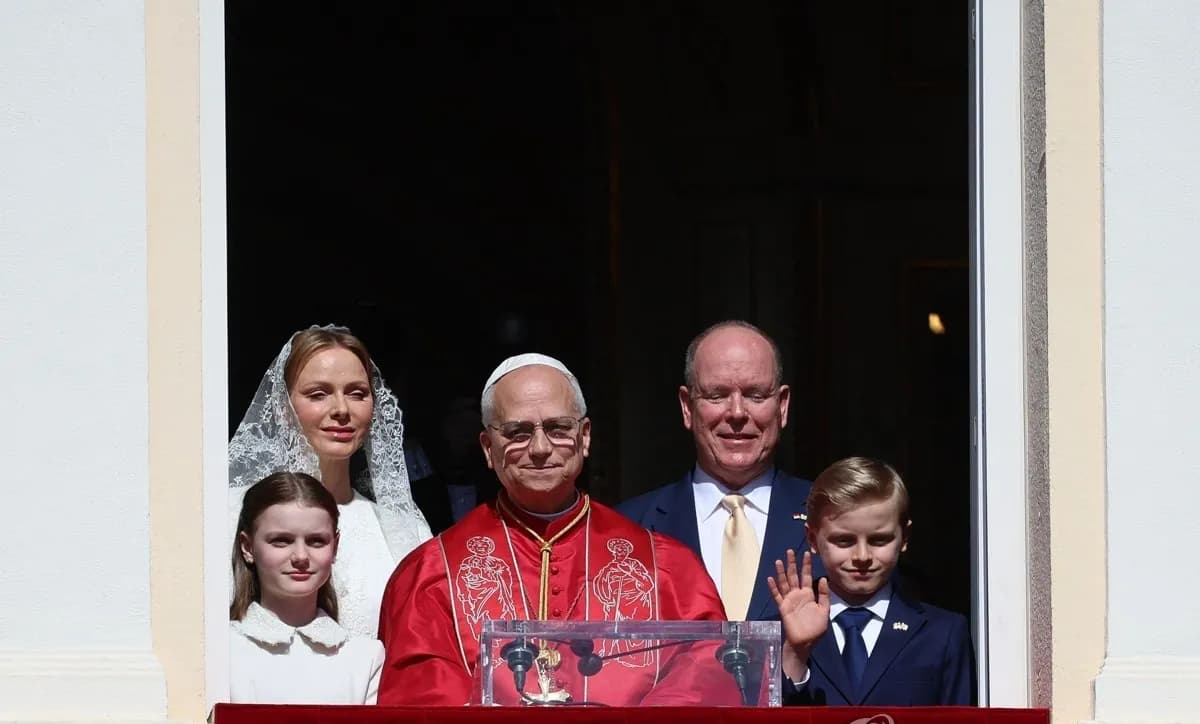
Pope Leo XIV Warns 'War Is Result of Idolatry of Power and Money' During Monaco Visit
Pope Leo XIV defines war as 'result of idolatry of power and money' during Monaco visit

Pro-Israel Extremist Arrested for Molotov Cocktail Attack Attempt on Palestinian Activist's Home in New York
Molotov cocktail attack attempt on pro-Palestinian activist's home in New York