Half of food waste greenhouse gases are caused by behavioral problems such as 'overeating and overbuying'
Nature climate change researchers announce results of analysis of sources of food loss and waste around the world
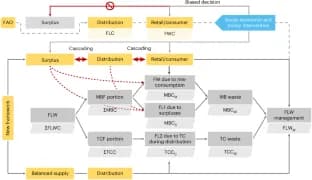
- •Half of food system greenhouse gas emissions come from food loss and waste.
- •Consumer behavior problems such as overeating and excessive purchasing were identified as the main causes.
- •Future policies are expected to expand from supply chain efficiency to changing consumer behavior.
Half of food system greenhouse gases come from food waste
A recent study published in Nature Climate Change found that about half of greenhouse gas emissions from the global food system come from food loss and waste. Researchers tracked the entire cradle-to-grave process of food, from production to disposal, and found that a significant portion of these emissions were caused by human behavior patterns rather than technological issues.
Why it matters: ‘Behavioral problems’ identified as key cause
The reason this study is attracting attention is that it defines the root cause of the food waste problem as ‘misbehaviour.’ Misbehavior here includes overbuying, overeating, impulsive food consumption, and improper food management at home.
The United Nations Environment Program (UNEP)'s 2024 Food Waste Index report also shows that billions of tons of food are wasted annually worldwide, and reducing this by half is set as a key task of Sustainable Development Goal (SDG) 12.3. However, it has been pointed out that while most policies to date have focused on supply chain efficiency, approaches to changing consumer behavior have been relatively lacking.
Where did this problem begin: The paradox of food surplus after the Green Revolution
Historically, food issues have been dealt with from the perspective of ‘scarcity’. The Green Revolution of the 1960s dramatically increased agricultural productivity and laid the foundation for feeding 9 billion people. However, in this process, a food surplus occurred, especially in developed countries, which led to a new environmental problem of food waste.
A 2016 study published in Environmental Science & Technology was the first to quantify the climate burden of food surplus, and since then systematic research on household food waste behavior has begun to accumulate. In 2021, the 'Household Waste Behavior Framework', which categorizes consumer food waste behavior, was presented, increasing academic interest in the impact of individual behavior on the environment.
Meanwhile, food security remains a serious problem in developing countries such as sub-Saharan Africa. This shows a paradoxical situation where there is an imbalance in food distribution around the world, with surplus occurring in some regions and deficiency occurring simultaneously in other regions.
Future outlook [AI analysis]
The results of this study are likely to provide important implications for climate change response policies. First, it is expected that food waste reduction policies will expand beyond supply chain efficiency to induce changes in consumer behavior. Improvements in food labeling, education on appropriate intake levels, and nudge policies to curb impulse purchases can be reviewed.
Second, a customized approach that takes into account differences in food waste patterns depending on income level appears to be necessary. Curbing excessive consumption is likely to be prioritized in high-income countries, while improving storage and distribution infrastructure is likely to be prioritized in low-income countries.
Third, in order to achieve the Sustainable Development Goal (SDG 12.3) of reducing food waste by half by 2030, monitoring and intervention strategies for individual eating habits and purchasing behavior are expected to be strengthened. However, regulations on individual behavior may lead to controversies over invasion of privacy, so a cautious approach is required during the policy design process.
댓글 (3)
간결하면서도 핵심을 잘 정리한 기사네요.
기사 잘 봤습니다. 다른 시각의 분석도 읽어보고 싶네요.
좋은 의견이십니다.
More in Life

16-year-old boy discovers 15cm megalodon tooth off Florida coast

Philadelphia Airport breaks world record with 1,291 cheesesteaks

How to get rid of seagulls? Attaching ‘eyeball stickers’ to food packaging is effective.

Search for extraterrestrial life, where should we send it?

A truck carrying 12 tons of KitKat disappears in Europe... The whereabouts of 410,000 chocolates remain unknown.

Customer appears on horseback at Chick-fil-A drive-thru in Florida, video goes viral
Latest News

Scotland Suffer Shock Defeat to Japan Ahead of World Cup Return
Scotland rugby team suffers defeat to Japan with poor performance ahead of World Cup

Election Banner Crisis Looms as Middle East Naphtha Shortage Hits Minor Parties
Middle East crisis causes naphtha supply disruption, threatens election banner cost explosion

Iran Crisis Fuels Market Volatility Amid Oil Price Concerns
Global and domestic markets face volatility from Iran-triggered oil crisis

4 out of 10 Industrial Deaths Due to Falls...Over 200 Workers Die Annually from Workplace Falls
4 out of 10 industrial deaths are caused by fall accidents

18 Arrested at Palestine Support Protest Outside London Police Headquarters
18 arrested at pro-Palestine protest outside London police headquarters

Iran-backed Houthis Join War with Attack Against Israel
Iran-backed Houthi rebels directly enter Middle East conflict with attacks on Israel

Pope Leo XIV Warns 'War Is Result of Idolatry of Power and Money' During Monaco Visit
Pope Leo XIV defines war as 'result of idolatry of power and money' during Monaco visit

Pro-Israel Extremist Arrested for Molotov Cocktail Attack Attempt on Palestinian Activist's Home in New York
Molotov cocktail attack attempt on pro-Palestinian activist's home in New York