'A Pragmatist's Love', a romance set in China in the 1970s, shows the essence of slow-burn romance.
Starring Arthur Chen and Sun Chen, captivating viewers with an exquisite combination of period drama and romance.

- •A Chinese drama set in the 1970s is attracting attention as a slow-burn romance
- •Delicately depicts the process of developing from a marriage of convenience to true love
- •It is well-received for calmly depicting the times and conveying universal emotions.
A new romantic drama set in China in the 1970s
The Chinese drama 'Love Story in the 1970s' is attracting attention for its unique historical setting and delicate romance. This work, based on Meng Zhong De Yi's novel of the same name, stars Arthur Chen and Sun Qian and tells the story of ordinary youth living in China in the 1970s.
In the play, Fang Muyang (played by Arthur Chen) and Fei Ni (played by Sun Chen) go from classmates to friends in school, and later become a couple through a marriage of convenience, but gradually develop into true love.
A depiction of society that calmly depicts the times
The biggest feature of this drama is that it shows daily life in China during the Mao Zedong era without bias. Instead of grandiose political messages, it illuminates the society of the time through the everyday difficulties of ordinary people.
The core conflict that the heroine Faney experiences arises from her brother's marriage problems. Because the family lives in a single room, her older brother cannot get married until Penny goes to college and leaves home. However, in China in the 1970s, college admission was not determined solely by ability. Recommendation from a factory manager or party official was essential, and despite Feini's sincerity, he failed to receive a recommendation for four consecutive years.
Through this, the drama shows the universal truth that any ideology is ultimately run by people, and that those in power can hide behind collectivist rhetoric and make personal and biased decisions.
Slow-burn romance that blooms naturally
If I were to describe ‘pragmatist’s love’ in one word, it would be ‘slow-burn romance’. From the first episode, the relationship between the two main characters slowly develops. Fang Muyang has liked Fei Ni since middle school, but they lost contact after moving. When he returns years later, he falls into a coma after an accident, and reunites with Faney, who was taking care of him, to get a college recommendation.
The highlight of this drama is the process of Fang Muyang waking up after losing her memory and falling in love with Pei Ni again. Through this, he comes to believe that the essence does not change even if there are no memories.
The two get married to receive a housing assignment, but share separate rooms. The deepening dependence on each other is delicately depicted without any grand confessions or bold skinship. The scenes in which Pang Muyang repairs a television all night long to help Feini get a job, and Feini confronts those who criticize him, represent the emotional changes of the two people.
Discovery of universal emotions in period dramas
Despite the unfamiliar setting of 1970s China, the emotions the drama deals with are universal. Stories that transcend time and space, such as sacrifice for family, desire for a dream, and transformation into unconditional love, elicit sympathy from viewers.
In particular, the two main characters who support each other and do not give up on their dreams even in difficult circumstances resonate with modern viewers.
댓글 (3)
기사 잘 봤습니다. 다른 시각의 분석도 읽어보고 싶네요.
그 부분은 저도 궁금했습니다.
Love 관련 기사 잘 읽었습니다. 유익한 정보네요.
More in Entertainment
43-year-old Taiwanese actor Lee Sun-kyun was spotted on a date in Tokyo with a Chinese conglomerate woman 20 years younger than him.

7 K-dramas that you watched until the end but regretted; the disappointing works selected by viewers

Japanese female idol urges fan meeting attendees to use deodorant

BTS achieves 3 wins at ‘Music Bank’ with ‘SWIM’

Kenny Omega eager to play Alex in Street Fighter sequel, "I'm determined to gain 50 pounds"

HBO deploys 'heavy security' after threat to kill actor who plays Snape in new Harry Potter series
Latest News

Middle East War Reaches One-Month Mark, Weekend Critical for Talks or Ground War
Middle East war from US-Israel-Iran strikes enters 27th day

ASEAN Summit to Proceed in Philippines in May Despite Middle East Conflict, Scale Reduced
ASEAN summit confirmed for May in Philippines despite prolonged Middle East conflict

Court Suspends Detention of Unification Church Leader Han Hak-ja, Temporary Release Until Next Month 30th
Court decides to suspend detention of Unification Church leader Han Hak-ja
People Power Party Strongly Criticizes President Lee's Cheonan Ship Remarks
People Power Party strongly criticizes President Lee Jae-myung's Cheonan-related remarks
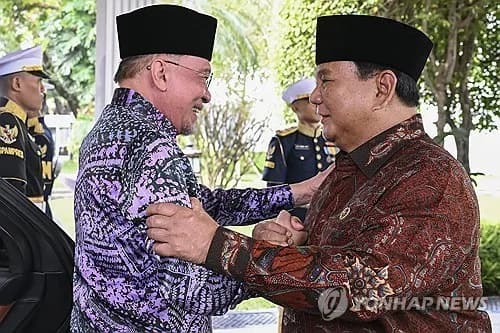
Malaysia-Indonesia Leaders Hold Emergency Talks on Middle East War Response
Malaysian PM Anwar and Indonesian President Prabowo held emergency talks in Jakarta

Tiger Woods Arrested for DUI Just 3 Days After Comeback—Fourth Vehicle-Related Incident
Tiger Woods arrested for DUI just 3 days after comeback

UK University Meningitis Outbreak: Worst Over but Concerns Remain About Recurrence
UK university meningococcal outbreak worst appears over, but cause remains unclear

Yen/Dollar Rate Breaks Through 160 Yen for First Time in 1 Year 8 Months Amid US-Iran War
Yen/dollar rate breaks through 160 yen for first time in 1 year 8 months amid US-Iran war