U.S. Lawmakers Push Back Against Delta's AI Pricing System
Concerns Mount Over Price Discrimination Based on Individual Willingness to Pay… Senators Demand Transparency
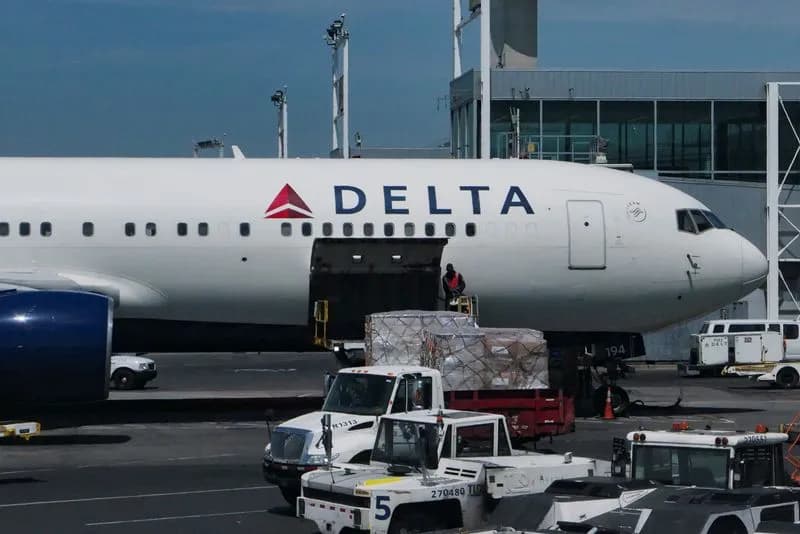
- •Delta Air Lines faces strong backlash from U.S. senators over its plan to implement AI-based pricing systems on 20% of domestic routes by the end of 2025.
- •Lawmakers raised concerns about price discrimination that raises fares to individual 'willingness to pay thresholds,' but Delta countered that it offers the same prices to all customers.
- •Frontier and Spirit Airlines are also under similar investigation, signaling the start of comprehensive AI pricing transparency regulation discussions across the aviation industry.
First AI Price Discrimination Controversy in U.S. Aviation Industry
Delta Air Lines' announcement that it will implement artificial intelligence (AI)-based revenue management technology on 20% of its domestic routes by the end of this year has drawn strong opposition from Democratic U.S. senators, who have raised concerns about potential consumer data privacy violations.
Senators Ruben Gallego, Mark Warner, and Richard Blumenthal warned in a letter sent to Delta CEO Ed Bastian on the 22nd (local time) that "Delta's personalized pricing practices will not only raise data privacy concerns, but will also result in fares being raised to each consumer's personal 'pain point.'"
Core Mechanism of AI Pricing Technology
Delta Air Lines is building a new revenue management system in partnership with Fetcherr, an Israeli AI pricing specialist. Delta executives revealed at an investor briefing that the technology can "predict how much people are willing to pay for premium products associated with base fares."
Delta immediately issued a clarification as the controversy expanded. In a statement, Delta emphasized that "there is no fare product that uses, tests, or plans to use individualized offers that target customers based on personal information."
The airline also disclosed specific ways it's using the AI technology currently being tested:
- Predicting demand for specific routes and flights
- Adapting to real-time market conditions
- Analyzing thousands of variables simultaneously
- Learning from each pricing decision to improve future outcomes
Delta explained that "all customers see the same fares and offers across all sales channels," and that the AI technology is intended to eliminate manual processes and accelerate analysis and adjustments.
The Line Between 30-Year-Old Dynamic Pricing and Personalized Pricing
Delta emphasizes that dynamic pricing has been a common practice in the aviation industry for over 30 years. Prices fluctuate based on various factors such as overall customer demand, but do not use specific consumers' personal information.
Comparison: Traditional Dynamic Pricing vs. AI Personalized Pricing
| Category | Traditional Dynamic Pricing | AI Personalized Pricing (Concerns) |
|---|---|---|
| Pricing Criteria | Overall market demand, remaining seats | Prediction of individual customer willingness to pay |
| Data Utilization | Anonymized collective data | Individual search history, purchase patterns |
| Price Transparency | Same price at same time | Potential for differential pricing per user |
| Regulatory Application | Existing airline fare regulations | New regulations needed |
The key issue is whether AI predicts "individual willingness to pay" to set differential prices. While Delta denies this, past statements by executives contain contradictory content, amplifying the controversy.
Expanding Investigation of Price Discrimination Across Aviation Industry
This Delta Air Lines controversy is not an isolated incident. Senator Blumenthal, along with Senators Maggie Hassan and Josh Hawley, sent similar inquiries to Frontier Airlines and Spirit Airlines in January.
The senators raised suspicions that the two low-cost carriers were "using customers' personal information to charge different seat fees to passengers on the same flight." Even passengers who paid the same fare faced different seat selection costs.
Frontier and Spirit have not yet issued official statements.
Balancing Consumer Protection and Technological Innovation
The senators' concerns are not simply opposition to technology adoption. The core issues are transparency and fairness. Senator Gallego and others noted in their letter that "at a time when American families are already struggling with rising costs," personalized pricing would further increase the burden on consumers.
The aviation industry expects the following efficiency improvements through AI:
- Improved demand forecasting accuracy - Reduced vacancy rates, maximized revenue
- Real-time market response - Immediate reflection of competitor price changes
- Reduced operating costs - Automation of manual pricing adjustment tasks
However, it's unclear whether these benefits will also reach consumers. The senators' position is that regulation is needed if AI only maximizes airline revenue while consumers bear higher prices.
[AI Analysis] Outlook for Strengthened Aviation Fare Transparency Regulations
The Delta Air Lines case is likely to become an important precedent for regulatory authorities to intervene before AI pricing technology becomes widespread.
Short-term Outlook (6 months to 1 year):
- Possibility that the U.S. Department of Transportation will launch a formal investigation into airline AI pricing practices
- Delta Air Lines may readjust the scope of its Fetcherr partnership or issue transparency reports
- Expected delays in AI pricing plans announced by other major airlines (American, United)
Medium to Long-term Outlook (1-3 years):
- Introduction of new federal-level transparency regulations on airline pricing
- Activation of legislative attempts such as "Algorithmic Price Discrimination Prohibition Act"
- Spread of comprehensive AI regulations like the European Union's AI Act to the United States
Technically, AI can already predict individual willingness to pay with high accuracy. The question is how far to allow this. The same controversy is likely to expand not only in the aviation industry but across hotels, car rentals, and e-commerce in general.
From a consumer perspective, attempts to avoid personalization tracking through VPN use, cookie deletion, and incognito mode searches are expected to increase. However, the fundamental solution is for technology developers and airlines to voluntarily establish ethical guidelines, or for regulatory authorities to set clear boundaries.
Delta Air Lines' response and Congress's follow-up actions are expected to be an important turning point in determining future standards for AI-based pricing.
댓글 (2)
Lawmakers에 대해 더 알고 싶어졌습니다. 후속 기사 부탁드립니다.
기사 잘 봤습니다. 다른 시각의 분석도 읽어보고 싶네요.
More in AI & Tech

Reddit Considers Face ID to Block Bots While Maintaining Anonymity

China Reduces Hypersonic Missile Core Technology Simulation to 7 Days

BTS Gwanghwamun Concert: AI Network Prevents Communication Crisis for 40,000 Fans

Czech Drone Factory Fire Under Investigation for Terrorism
Trump Slams NATO Allies as 'Cowards' Over Strait of Hormuz Refusal

Google Unveils Gemini 3.1 Flash-Lite Optimized for High-Volume Processing
Latest News

이스라엘, 헤즈볼라 무기 통로 레바논 다리 공습
이스라엘군, 헤즈볼라 무기 통로 레바논 다리 공습

중동행 전세기 전쟁보험료 최고 7천500만원
중동행 전세기 전쟁보험료가 최고 5만달러(7천500만원)로 상승

이란 탄도미사일, 이스라엘 방어망 뚫고 160명 부상
이란 탄도미사일이 이스라엘 방공망을 통과해 160명 부상
Middle East Conflict Drives Manufacturing Outlook to 10-Month Low
The Korea Institute for Industrial Economics & Trade survey shows April manufacturing outlook PSI plummeted to 88, falling below baseline for the first time in 10 months.

Lee Jae-myung Administration Excludes Multi-Home Officials from Real Estate Policymaking
President Lee Jae-myung has ordered the exclusion of multi-home owning public officials from all real estate policy processes.

Southeast Asia Growth Forecasts Cut Amid Oil Price Surge, Threatening Korean Exports
Maybank Research has downgraded ASEAN-6's 2026 growth forecast from 4.8% to 4.5%.

Volkswagen CEO Says Germany Should Learn from China's Industrial Strategy
Volkswagen CEO stated that Germany should learn from China's systematic industrial planning approach.

BTS Tops March Artist Brand Reputation Rankings with First Full Group Comeback in 4 Years
BTS ranked first in the Korean Corporate Reputation Research Institute's March Artist Brand Reputation Rankings based on 99 million data points.