U.S. Congress Reopens Debate on Youth Screen Time Regulation
As Australia Implements Social Media Ban for Under-16s, U.S. Still Struggles to Pass Legislation

- •The U.S. Senate held a hearing on youth screen time regulation, but despite years of discussion, no legislation has been passed.
- •Australia implemented the world's first social media ban for those under 16, while the U.S. remains limited to individual state-level responses.
- •Experts warned that the screen-centered restructuring of childhood is dramatically damaging learning abilities and mental health.
Youth Spending Half Their Waking Hours in Front of Screens
The U.S. Senate Committee on Commerce, Science, and Transportation held a hearing on January 15 (local time) to address regulation of youth screen time and social media use. Experts warned that "technology is fundamentally transforming childhood, and this threatens even the health of our democracy."
Emily Cherkin, founder of a screen time consultancy, testified that "comprehensively restructuring childhood around screens is catastrophic for children and families." Republican Senator Ted Cruz emphasized the importance of real-world experiences, noting that "teens spend more than half their waking hours staring at screens."
Years of Legislative Debate Stalled While Other Nations Take Action
The U.S. Congress has held repeated hearings on social media and Big Tech regulation for years, but has yet to pass meaningful legislation. Attempts to regulate Big Tech companies that harm children for profit have been made, but consensus on comprehensive legislation remains elusive.
Meanwhile, other countries are moving quickly. Australia recently became the first country in the world to implement a law banning social media use for those under 16, and several nations are considering similar measures.
| Category | United States | Australia |
|---|---|---|
| Regulatory Status | Repeated hearings, no legislation passed | Social media ban for under-16s implemented |
| Regulatory Authority | Individual state-level responses | Federal unified regulation |
| Corporate Self-Regulation | Platform-specific voluntary restrictions | Legally mandated requirements |
Currently in the U.S., tech companies are creating their own rules and best practices. Under pressure from Congress and parents, social media companies and AI developers have introduced some restrictions and parental control features, but advocacy groups point out that these efforts fall far short of solving the problem.
School Digital Device Integration Leads to Declining Learning Abilities
The acceleration of digital transformation in schools following the pandemic was also identified as problematic. Many school districts have embraced one device per student starting in elementary school, actively incorporating technology into instruction and homework. Policies from the remote learning era continue to negatively impact educational outcomes and social skills.
Jared Cooney Horvath, Director at LME Global, warned: "Screen size doesn't matter. Whether it's a phone, laptop, or desktop, who purchased it, whether the school approved it, whether it has an 'educational' label—none of that matters. All of it will harm learning."
Researchers have found that smartphone use and social media access are associated with negative mental health outcomes, higher rates of anxiety and depression. Experts point out that increased screen time is dramatically impairing children's ability to learn and interact with others.
As Federal Government Stalls, States Fill the Gap
With federal legislation delayed, U.S. states are pursuing independent regulation. Diverse bills are passing in state legislatures across the country, transcending political ideology.
State-level legislation includes data privacy protections, restrictions on content accessible to minors, artificial intelligence regulation, and limitations on tech company operations. This demonstrates that states are addressing problems the federal government has failed to solve, each in their own way.
[AI Analysis] Regulatory Delay May Deepen Generational Digital Divide
The U.S. Congress's years-long failure to translate youth screen time regulation debates into passed legislation offers several implications.
First, Big Tech lobbying and First Amendment (freedom of expression) debates are likely major factors delaying regulation. Unlike Australia, the U.S. has a legal structure where platform regulation can be interpreted as infringing on freedom of speech, making legal consensus more difficult.
Second, fragmented state-level regulation may facilitate corporate regulatory avoidance. If California and Texas have different regulations, companies have an incentive to operate according to the standards of the more lenient state.
Third, as schools become increasingly dependent on digital devices, a paradox is emerging where screen time is justified under the guise of being 'educational'. If educational devices also negatively impact learning, as expert testimony suggests, a comprehensive review of current educational policies will be necessary.
Fourth, if federal regulation continues to be delayed, there are concerns about widening gaps in digital literacy and mental health between American youth and youth in other countries. Comparing outcomes ten years from now between countries with strong regulations like Australia and the U.S.'s reliance on self-regulation will provide important data for future policy decisions.
댓글 (4)
Congress 관련 기사 잘 읽었습니다. 유익한 정보네요.
그 부분은 저도 궁금했습니다.
흥미로운 주제입니다. 주변에도 공유해야겠어요.
Debate에 대해 더 알고 싶어졌습니다. 후속 기사 부탁드립니다.
More in AI & Tech

Reddit Considers Face ID to Block Bots While Maintaining Anonymity

China Reduces Hypersonic Missile Core Technology Simulation to 7 Days

BTS Gwanghwamun Concert: AI Network Prevents Communication Crisis for 40,000 Fans

Czech Drone Factory Fire Under Investigation for Terrorism
Trump Slams NATO Allies as 'Cowards' Over Strait of Hormuz Refusal
Google Unveils Gemini 3.1 Flash-Lite Optimized for High-Volume Processing
Latest News

이스라엘, 헤즈볼라 무기 통로 레바논 다리 공습
이스라엘군, 헤즈볼라 무기 통로 레바논 다리 공습

중동행 전세기 전쟁보험료 최고 7천500만원
중동행 전세기 전쟁보험료가 최고 5만달러(7천500만원)로 상승

이란 탄도미사일, 이스라엘 방어망 뚫고 160명 부상
이란 탄도미사일이 이스라엘 방공망을 통과해 160명 부상
Middle East Conflict Drives Manufacturing Outlook to 10-Month Low
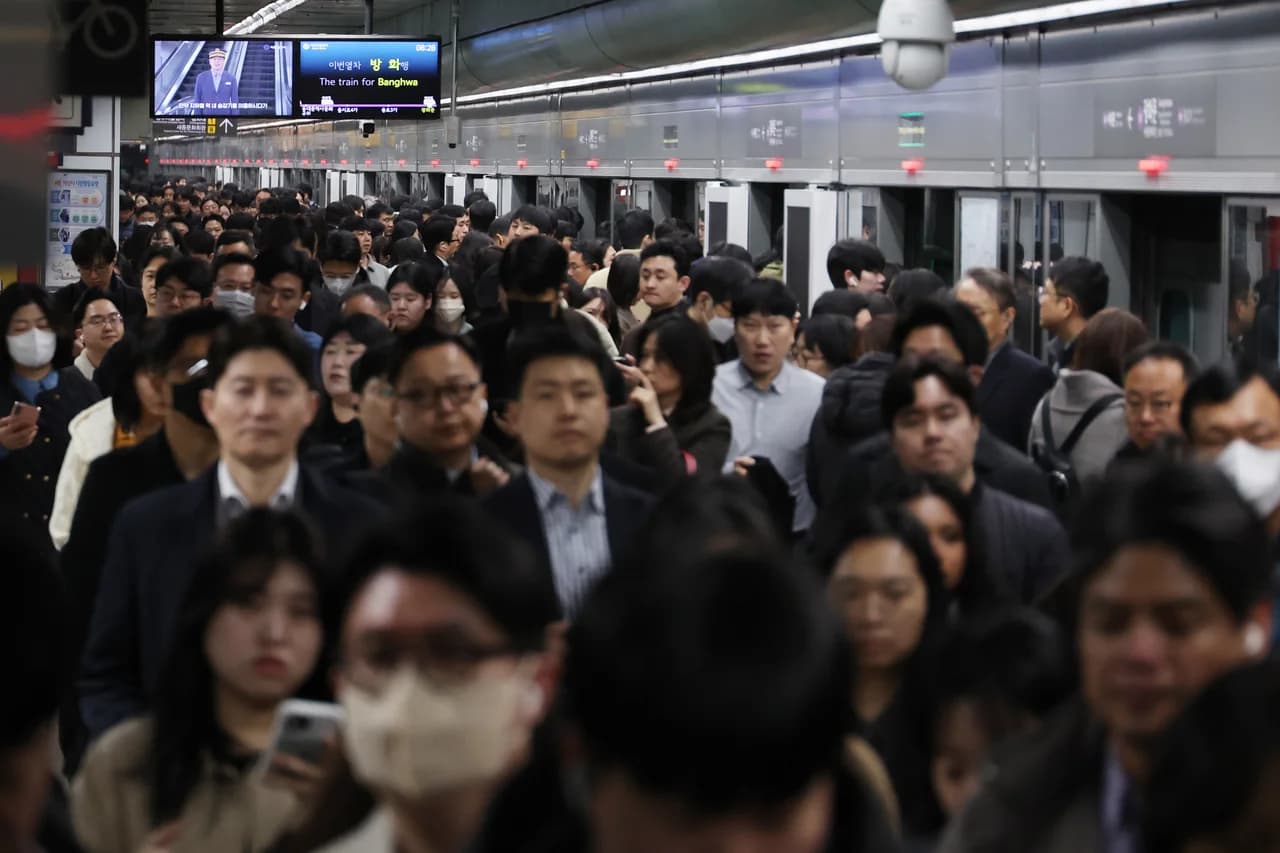
The Korea Institute for Industrial Economics & Trade survey shows April manufacturing outlook PSI plummeted to 88, falling below baseline for the first time in 10 months.

Lee Jae-myung Administration Excludes Multi-Home Officials from Real Estate Policymaking
President Lee Jae-myung has ordered the exclusion of multi-home owning public officials from all real estate policy processes.

Southeast Asia Growth Forecasts Cut Amid Oil Price Surge, Threatening Korean Exports
Maybank Research has downgraded ASEAN-6's 2026 growth forecast from 4.8% to 4.5%.

Volkswagen CEO Says Germany Should Learn from China's Industrial Strategy
Volkswagen CEO stated that Germany should learn from China's systematic industrial planning approach.

BTS Tops March Artist Brand Reputation Rankings with First Full Group Comeback in 4 Years
BTS ranked first in the Korean Corporate Reputation Research Institute's March Artist Brand Reputation Rankings based on 99 million data points.