Thailand's Non-Life Insurance Market Revises Growth Rate Amid Natural Disasters and Election Variables
2025 growth rate lowered from 3.5% to 2.5%; 2026 expected to benefit from economic stimulus and general election effects
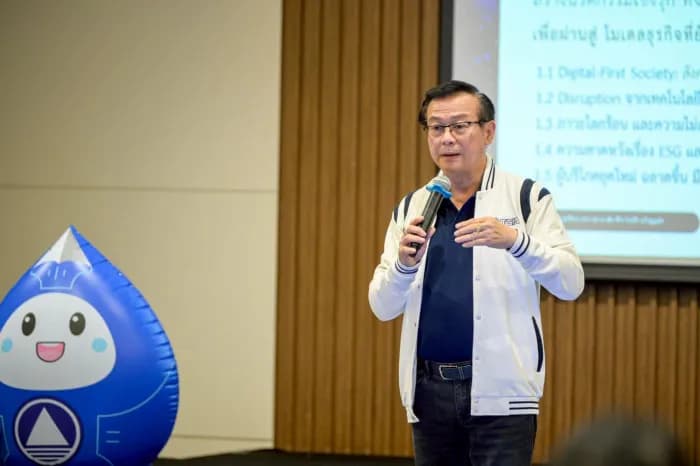
- •Thailand's non-life insurance industry's 2025 growth forecast has been revised down from 3.5% to 2.5% due to economic slowdown.
- •As the frequency and magnitude of natural disasters increase, insurers are accelerating the adoption of AI, IoT, and big data-based risk management systems.
- •2026 is expected to see consumption increases due to the new government's economic stimulus measures and general election effects, with digital transformation emerging as a key competitive factor.
Growth Rate Lowered by 1%p Due to Economic Slowdown
The Thai General Insurance Association (TGIA) announced on the 23rd that it has revised down its 2025 non-life insurance industry growth forecast from 3.5% to 2.5%. The primary driver is the overall slowdown in Thailand's economy.
In an interview with the Bangkok Post, TGIA President Somporn Suebthawilkul stated, "If the new government can restore consumer and business confidence, it will have a positive effect on domestic spending and the overall economy," suggesting that 2026 could see higher growth rates than this year.
Natural Disaster Risks: Both Frequency and Magnitude Increasing
The biggest variable facing Thailand's non-life insurance industry is the intensification of natural disasters. President Somporn pointed out, "In the past, flooding occurred once a year in limited areas, but now damage occurs multiple times throughout the year in numerous regions."
Accordingly, insurance companies are strengthening disaster risk assessments and building risk management systems utilizing innovative technologies. In particular, discussions are underway on systematically categorizing risk zones through flood zoning systems and applying this to premium calculations and portfolio management.
TGIA has proposed real-time updates to a digital flood risk map that can be jointly utilized by public and private sectors, and enhancing spatial risk assessment capabilities by combining Internet of Things (IoT) with Geographic Information Systems (GIS).
Digital Transformation and AI-Based Innovation Accelerating
Thailand's non-life insurance industry is accelerating innovation across products, services, and business models. President Somporn emphasized the urgency of digital transformation, stating, "Consumers now expect to seamlessly handle everything from policy purchase to claims filing through their smartphones."
In the auto insurance sector, work is underway to establish standard benchmark prices for vehicles and repair costs using AI and big data. This enables real-time reflection of market conditions, increases transparency in premium calculations, and reduces claims disputes.
In accident and health insurance, wellness programs, telemedicine, AI health assistants, predictive risk detection systems, and automated instant claims processing systems are attracting attention as key innovation drivers.
Artificial Intelligence (AI), big data, blockchain, Internet of Things (IoT), and sensor technologies play central roles in data analysis and proactive risk management. President Somporn emphasized, "The key is predicting and responding before problems occur, even acting before customers fully recognize their needs."
2026 Growth Drivers: General Election and Economic Stimulus
TGIA expects the industry's growth rate in 2026 to exceed this year's. The main drivers are expected to be the new government's fiscal stimulus measures and increased liquidity ahead of the general election.
President Somporn presented an optimistic outlook, stating, "Post-election increases in consumer and business spending will have a positive impact on non-life insurance industry growth."
Changes in Consumer Behavior and Trust-Based Purchasing Increase [AI Analysis]
New-generation consumers have gained higher information accessibility, enabling them to compare insurance products quickly and efficiently. Insurance is no longer simply a product for fulfilling legal obligations, but is being selected based on whether it provides real value grounded in trust.
These changes demand that insurers strengthen product transparency, improve digital experiences, and build proactive risk management capabilities. In particular, AI-based personalized services and real-time risk assessment systems are likely to become key competitive factors going forward.
Thailand's non-life insurance market's 2026 growth rate will likely depend on the effectiveness of fiscal policies and the frequency of natural disasters. Companies that establish digital transformation and data-based risk management systems early are likely to lead the market.
댓글 (3)
마음이 무겁습니다. 삼가 고인의 명복을 빕니다.
이런 일이 다시는 반복되지 않았으면 합니다. Non-Life 관련 대책이 시급합니다.
위로의 말씀 공감합니다.
More in AI & Tech

Reddit Considers Face ID to Block Bots While Maintaining Anonymity

China Reduces Hypersonic Missile Core Technology Simulation to 7 Days

BTS Gwanghwamun Concert: AI Network Prevents Communication Crisis for 40,000 Fans

Czech Drone Factory Fire Under Investigation for Terrorism

Trump Slams NATO Allies as 'Cowards' Over Strait of Hormuz Refusal

Google Unveils Gemini 3.1 Flash-Lite Optimized for High-Volume Processing
Latest News

이스라엘, 헤즈볼라 무기 통로 레바논 다리 공습
이스라엘군, 헤즈볼라 무기 통로 레바논 다리 공습

중동행 전세기 전쟁보험료 최고 7천500만원
중동행 전세기 전쟁보험료가 최고 5만달러(7천500만원)로 상승

이란 탄도미사일, 이스라엘 방어망 뚫고 160명 부상
이란 탄도미사일이 이스라엘 방공망을 통과해 160명 부상

Middle East Conflict Drives Manufacturing Outlook to 10-Month Low
The Korea Institute for Industrial Economics & Trade survey shows April manufacturing outlook PSI plummeted to 88, falling below baseline for the first time in 10 months.

Lee Jae-myung Administration Excludes Multi-Home Officials from Real Estate Policymaking
President Lee Jae-myung has ordered the exclusion of multi-home owning public officials from all real estate policy processes.

Southeast Asia Growth Forecasts Cut Amid Oil Price Surge, Threatening Korean Exports
Maybank Research has downgraded ASEAN-6's 2026 growth forecast from 4.8% to 4.5%.

Volkswagen CEO Says Germany Should Learn from China's Industrial Strategy
Volkswagen CEO stated that Germany should learn from China's systematic industrial planning approach.

BTS Tops March Artist Brand Reputation Rankings with First Full Group Comeback in 4 Years
BTS ranked first in the Korean Corporate Reputation Research Institute's March Artist Brand Reputation Rankings based on 99 million data points.