Trump Administration Launches Private Health Tracking System in Partnership with Big Tech
New health information platform announced for sharing personal medical data with big tech companies

- •The Trump administration has announced the construction of a private health tracking system in collaboration with big tech companies to collect personal health data.
- •Privacy concerns are growing as cases emerge of Medicaid enrollee data being used for immigration enforcement.
- •The United States is experiencing its worst measles outbreak in 30 years this year, with more than 1,300 cases reported.
U.S. Government Building Health Data System in Collaboration with Big Tech
U.S. President Donald Trump has announced the construction of a new private health tracking system that will allow millions of Americans to upload personal health data and medical records. This initiative is being developed with technical support from big tech companies, aiming to digitize and centralize personal medical information.
The system is expected to operate by encouraging Americans to voluntarily upload their health records to a digital platform. The Trump administration anticipates that this will enhance the efficiency of healthcare services and strengthen personalized health management.
Privacy Concerns and Government Data Access Controversy
However, this announcement has raised serious privacy concerns. Particularly alarming is the recent revelation that the Trump administration provided personal data of millions of Medicaid enrollees to immigration enforcement authorities, heightening anxiety about government access to health information.
Medicaid enrollee data includes sensitive personal information, including immigration status, which has reportedly been used in deportation proceedings. This case amplifies concerns that if the new health tracking system is established, personal medical information could be used for purposes other than its original intent.
Spread of Online Age Verification and Internet Freedom Restriction Debate
This health data system announcement aligns with the recent spread of online age verification systems across the United States. Several states have mandated age verification to restrict access to pornography sites, a trend that is gradually expanding to other online services.
Opponents point out that this trend is a concerning trajectory toward a less safe, less private, and less free internet. They argue that users could be denied access not only to pornography but also to other content, and that personal information is likely to be collected extensively.
California's case is also noteworthy. According to a report by The Markup, California's health insurance exchange was found to have transmitted pregnancy information and domestic violence-related data to LinkedIn during marketing campaigns. This represents a concrete example of how sensitive health information can be leaked to big tech platforms.
Health Data System Launch Amid Public Health Crisis
This health tracking system announcement comes as the United States faces multiple public health crises.
Declining Vaccination Rates: U.S. childhood vaccination rates have declined again, with exemption rates setting another record. Particularly this year has seen the worst measles outbreak in 30 years, with more than 1,300 measles cases reported to date.
Increased Ultra-Processed Food Consumption: According to a CDC report, Americans are consuming more than half of their total calories from ultra-processed foods. Health Secretary Robert F. Kennedy Jr. has condemned these foods as causing chronic diseases and advocates for strong regulation.
Tylenol-Autism Controversy: President Trump's claim that pregnant women should never take Tylenol has reignited debate about the potential link between autism causes and Tylenol. Many doctors and scientists have expressed bewilderment at such claims.
Big Tech's Accelerated Entry into Health Data Industry
The Trump administration's initiative is expected to serve as a catalyst for big tech companies to fully enter the health data industry. Major technology companies such as Google, Apple, and Amazon are already expanding health management services, and the likelihood of securing broader data access rights through government collaboration has increased.
However, this simultaneously raises concerns about data monopolization and privacy violations. Critics point out that sensitive health information could be used for commercial purposes or shared with insurance companies to influence premium calculations.
[AI Analysis] New Phase of Health Data Sovereignty
This announcement is likely to formally raise the issue of sovereignty over personal health data. In the United States, which lacks strong personal information protection regulations like the EU's GDPR, the following changes are anticipated as government and big tech access to health data expands.
First, legal disputes over data ownership and control rights will intensify. Clear legal standards are needed regarding who owns health information uploaded by individuals and for what purposes it can be used.
Second, regulations on the secondary use of health information are likely to be strengthened. As in the case of Medicaid data being used for immigration enforcement, institutional safeguards must be established to prevent data from being used for purposes other than its original intent.
Third, concerns about health data-based discrimination may become reality. If insurance companies, employers, and government agencies gain access to individuals' health information, the possibility of disadvantages based on this information cannot be ruled out.
Finally, there are concerns that the digital health divide may deepen. Those with low digital literacy or limited technology access may be excluded from such systems, potentially exacerbating health inequality.
While the Trump administration's health tracking system presents the rationale of medical innovation and efficiency improvement, without solutions to the fundamental issues of privacy protection and data sovereignty, it risks degenerating into another surveillance infrastructure.
댓글 (3)
관계자분들의 노력에 박수를 보냅니다.
동의합니다. 앞으로가 더 기대됩니다.
오랜만에 기분 좋은 뉴스를 접했습니다.
More in AI & Tech

Reddit Considers Face ID to Block Bots While Maintaining Anonymity

China Reduces Hypersonic Missile Core Technology Simulation to 7 Days

BTS Gwanghwamun Concert: AI Network Prevents Communication Crisis for 40,000 Fans

Czech Drone Factory Fire Under Investigation for Terrorism

Trump Slams NATO Allies as 'Cowards' Over Strait of Hormuz Refusal

Google Unveils Gemini 3.1 Flash-Lite Optimized for High-Volume Processing
Latest News

이스라엘, 헤즈볼라 무기 통로 레바논 다리 공습
이스라엘군, 헤즈볼라 무기 통로 레바논 다리 공습

중동행 전세기 전쟁보험료 최고 7천500만원
중동행 전세기 전쟁보험료가 최고 5만달러(7천500만원)로 상승

이란 탄도미사일, 이스라엘 방어망 뚫고 160명 부상
이란 탄도미사일이 이스라엘 방공망을 통과해 160명 부상
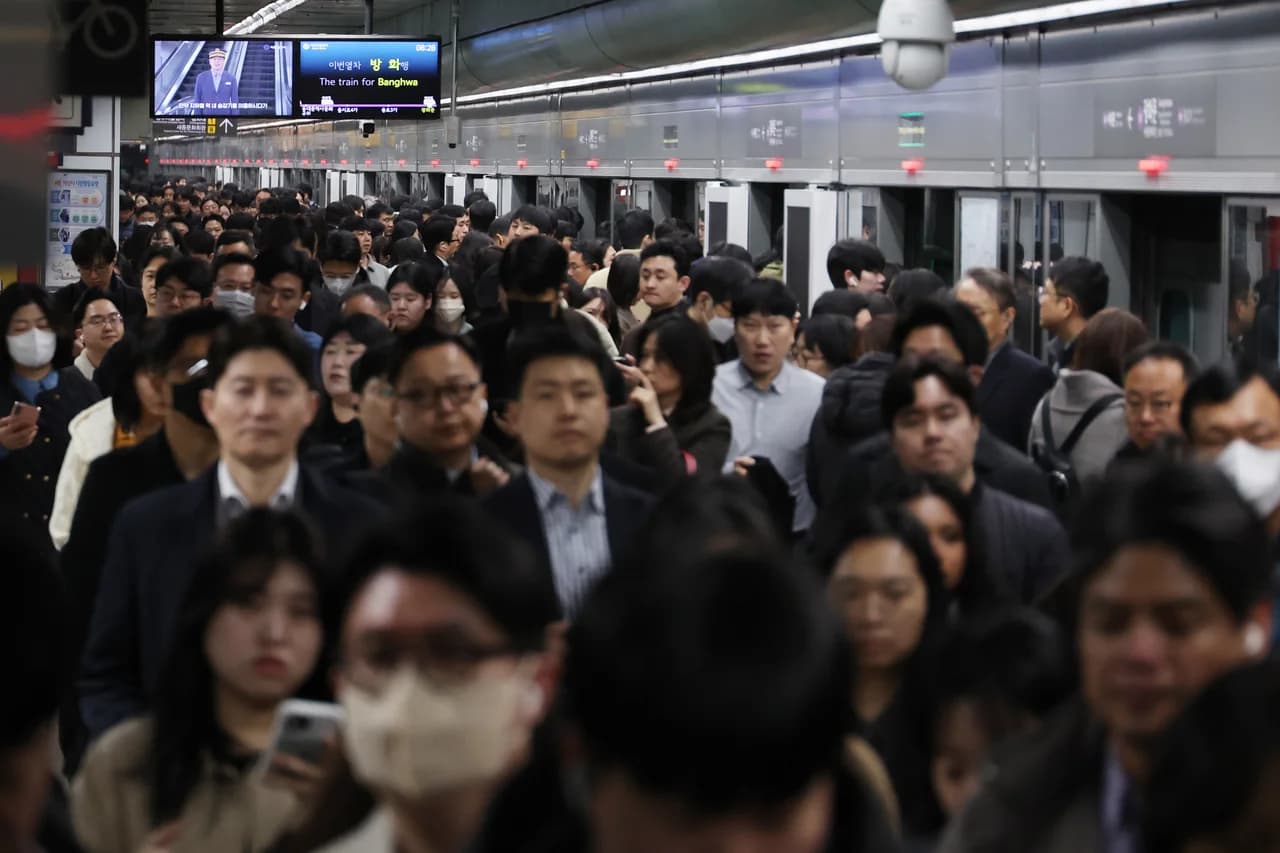
Middle East Conflict Drives Manufacturing Outlook to 10-Month Low
The Korea Institute for Industrial Economics & Trade survey shows April manufacturing outlook PSI plummeted to 88, falling below baseline for the first time in 10 months.

Lee Jae-myung Administration Excludes Multi-Home Officials from Real Estate Policymaking
President Lee Jae-myung has ordered the exclusion of multi-home owning public officials from all real estate policy processes.

Southeast Asia Growth Forecasts Cut Amid Oil Price Surge, Threatening Korean Exports
Maybank Research has downgraded ASEAN-6's 2026 growth forecast from 4.8% to 4.5%.

Volkswagen CEO Says Germany Should Learn from China's Industrial Strategy
Volkswagen CEO stated that Germany should learn from China's systematic industrial planning approach.

BTS Tops March Artist Brand Reputation Rankings with First Full Group Comeback in 4 Years
BTS ranked first in the Korean Corporate Reputation Research Institute's March Artist Brand Reputation Rankings based on 99 million data points.