U.S. Department of Energy to Build Next-Generation AI Supercomputers with NVIDIA, HPE, and Oracle
$370 Million Project for National Security Features 100,000 Blackwell GPUs

- •The U.S. Department of Energy is collaborating with NVIDIA, HPE, and Oracle to build four next-generation AI supercomputers totaling $370 million.
- •Los Alamos Laboratory's Mission system will verify nuclear security without nuclear testing at speeds 4 times faster than existing systems, while Vision will support Foundation and Agentic AI models.
- •Argonne Laboratory's Solstice, equipped with 100,000 NVIDIA Blackwell GPUs, will be DOE's largest AI supercomputer, and along with Equinox completing in 2026, will handle energy and security research.
Key Details
The U.S. Department of Energy (DOE) and National Nuclear Security Administration (NNSA) have launched a next-generation supercomputer development project aimed at strengthening national security, artificial intelligence (AI), and scientific research. This initiative, totaling $370 million (approximately 514.3 billion KRW), will proceed through collaboration with major technology companies including NVIDIA, HPE, and Oracle.
Los Alamos National Laboratory (LANL) will develop the Mission and Vision supercomputers in partnership with HPE and NVIDIA. Argonne National Laboratory (ANL) will build the Solstice and Equinox systems together with NVIDIA and Oracle.
Los Alamos Laboratory's Mission & Vision Systems
The Mission supercomputer aims to assess and improve nuclear security without nuclear testing. Boasting processing speeds 4 times faster than the existing Crossroads system, it will provide advanced AI, modeling, and simulation capabilities for NNSA's national security programs.
The Vision supercomputer expands NNSA's AI capabilities based on the success of HPE's Venado system. It plans to accelerate research in national security, energy, and scientific fields by utilizing AI capabilities including Foundation Models and Agentic Models.
Both systems are based on the HPE Cray Supercomputing GX5000 architecture and feature Direct Liquid Cooling technology and NVIDIA Vera Rubin superchips.
Argonne Laboratory's Solstice & Equinox Projects
Solstice, being built by Argonne National Laboratory, will be the largest AI supercomputer across all DOE facilities. Equipped with 100,000 NVIDIA Blackwell GPUs, it will focus on solving critical challenges in energy, security, and discovery science.
Equinox, scheduled for completion in 2026, will be equipped with 10,000 GPUs. Both systems will operate integrated with DOE's scientific equipment and data networks.
System Comparison
| System | Development Agency | Partner Companies | GPU Scale | Key Features |
|---|---|---|---|---|
| Mission | Los Alamos | HPE, NVIDIA | Undisclosed | 4x faster than Crossroads, nuclear security simulation |
| Vision | Los Alamos | HPE, NVIDIA | Undisclosed | Supports AI Foundation/Agentic models |
| Solstice | Argonne | NVIDIA, Oracle | 100,000 (Blackwell) | DOE's largest AI supercomputer |
| Equinox | Argonne | NVIDIA, Oracle | 10,000 | Scheduled for 2026 completion |
Technical Significance
This project demonstrates that the U.S. government is making large-scale investments in AI-specialized supercomputing infrastructure for national security and scientific research. Particularly noteworthy is the mass adoption of NVIDIA's latest Blackwell GPUs and Vera Rubin superchips.
HPE Cray GX5000's direct liquid cooling technology is a key element in solving thermal management issues for high-density GPU clusters. As AI workloads increase, the importance of energy-efficient cooling solutions is growing.
National Security Importance
It is significant that the Mission supercomputer will verify nuclear weapon safety without nuclear testing. Under the Comprehensive Nuclear-Test-Ban Treaty (CTBT) regime, nuclear-armed states must rely on computer simulations to maintain the reliability of their nuclear arsenals.
Vision's support for agentic AI models represents an attempt to apply autonomously operating AI systems to national security. This suggests the potential for automating tasks such as threat analysis and scenario forecasting.
[AI Analysis] Future Outlook
This supercomputer project can be seen as part of the U.S. government's AI Sovereignty strategy. As China rapidly expands its own supercomputing capabilities, the United States is showing movement toward building computing infrastructure directly tied to national security under government leadership while reducing dependence on private companies.
Solstice, with its scale of 100,000 NVIDIA Blackwell GPUs, is likely to influence commercial AI model development as well. If foundation models developed by DOE laboratories are released as open-source for scientific research, significant ripple effects are expected in academia and industry.
After Equinox's completion in 2026, DOE is expected to accumulate operational expertise in integrating AI and traditional HPC (High-Performance Computing). This is anticipated to accelerate innovation in computation-intensive fields such as climate modeling, new materials development, and fusion research.
Additionally, if HPE's direct liquid cooling technology is validated, it could potentially become the standard cooling method for large-scale AI data centers in the future. This is expected to contribute to reducing data center operating costs and carbon emissions.
댓글 (4)
Department에 대해 더 알고 싶어졌습니다. 후속 기사 부탁드립니다.
of 관련 기사 잘 읽었습니다. 유익한 정보네요.
그 부분은 저도 궁금했습니다.
기사 잘 봤습니다. 다른 시각의 분석도 읽어보고 싶네요.
More in this series
More in AI & Tech

Reddit Considers Face ID to Block Bots While Maintaining Anonymity
China Reduces Hypersonic Missile Core Technology Simulation to 7 Days

BTS Gwanghwamun Concert: AI Network Prevents Communication Crisis for 40,000 Fans
Czech Drone Factory Fire Under Investigation for Terrorism

Trump Slams NATO Allies as 'Cowards' Over Strait of Hormuz Refusal
Google Unveils Gemini 3.1 Flash-Lite Optimized for High-Volume Processing
Latest News
이스라엘, 헤즈볼라 무기 통로 레바논 다리 공습
이스라엘군, 헤즈볼라 무기 통로 레바논 다리 공습
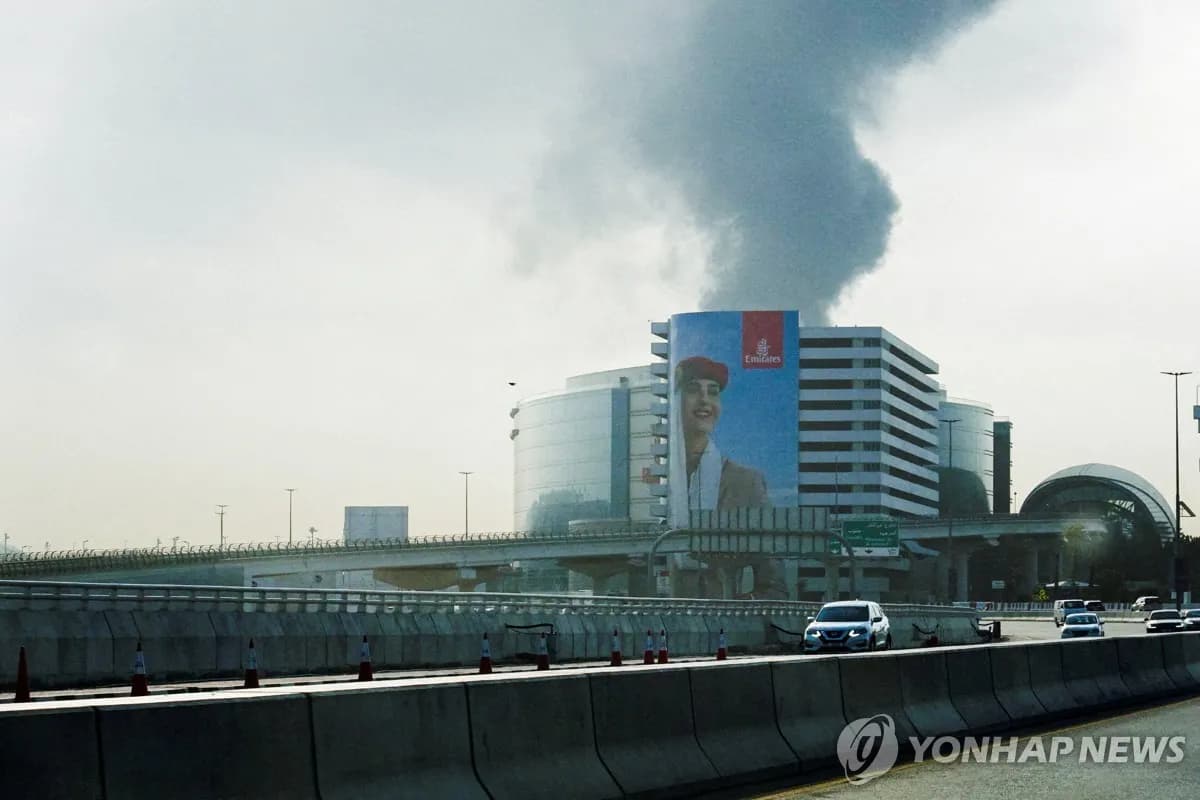
중동행 전세기 전쟁보험료 최고 7천500만원
중동행 전세기 전쟁보험료가 최고 5만달러(7천500만원)로 상승

이란 탄도미사일, 이스라엘 방어망 뚫고 160명 부상
이란 탄도미사일이 이스라엘 방공망을 통과해 160명 부상
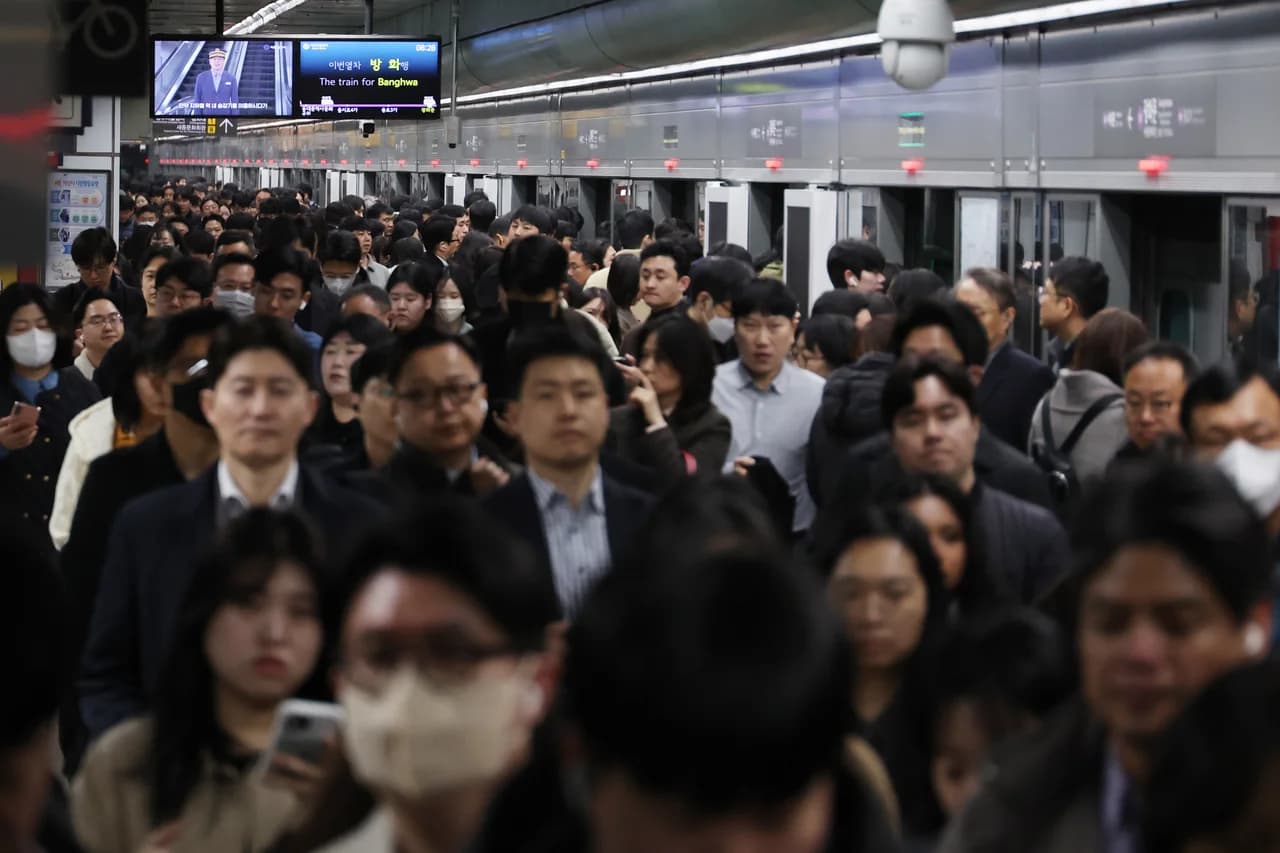
Middle East Conflict Drives Manufacturing Outlook to 10-Month Low
The Korea Institute for Industrial Economics & Trade survey shows April manufacturing outlook PSI plummeted to 88, falling below baseline for the first time in 10 months.

Lee Jae-myung Administration Excludes Multi-Home Officials from Real Estate Policymaking
President Lee Jae-myung has ordered the exclusion of multi-home owning public officials from all real estate policy processes.

Southeast Asia Growth Forecasts Cut Amid Oil Price Surge, Threatening Korean Exports
Maybank Research has downgraded ASEAN-6's 2026 growth forecast from 4.8% to 4.5%.

Volkswagen CEO Says Germany Should Learn from China's Industrial Strategy
Volkswagen CEO stated that Germany should learn from China's systematic industrial planning approach.

BTS Tops March Artist Brand Reputation Rankings with First Full Group Comeback in 4 Years
BTS ranked first in the Korean Corporate Reputation Research Institute's March Artist Brand Reputation Rankings based on 99 million data points.