ABS Challenge System: How Well Did Players Optimize in Week One?
Early data from MLB's 2026 Automated Ball-Strike Challenge reveals strategic gaps and promising patterns
- •In MLB's first week of ABS Challenges, 2-2 count usage was solid, but 0-0 challenges were too frequent.
- •54% of challenges came in the 6th inning or later, but experts argue 70% should be the target.
- •Minor league data suggests player strategy will sharpen significantly as the season progresses.
Two Seconds to Decide
Major League Baseball's new Automated Ball-Strike (ABS) Challenge system completed its first week of action in the 2026 season. How efficiently did players deploy this new tool? Early data paints a nuanced picture: performance was reasonable, but far from optimal.
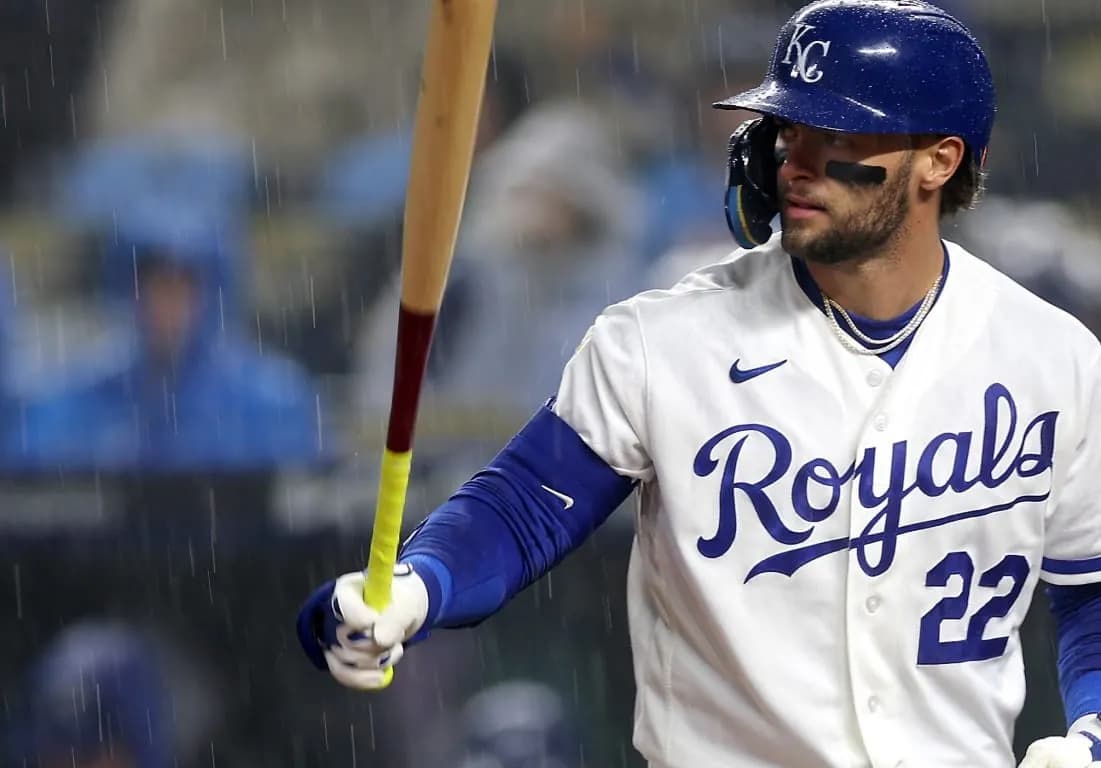
During the Mariners' opening series against the Guardians, television analyst and former MLB pitcher Ryan Rowland-Smith noticed a telling pattern — hitters hesitated. They wanted to tap their helmets and challenge borderline calls, but mostly held back. The reason is straightforward: teams are allowed only two failed challenges per game, and the window to challenge closes just two seconds after the pitch.
Count Leverage Is Everything
Batters and catchers have always understood the general value of counts intuitively. But the ABS system demands precise quantification.
On a full count (3-2), the expected run value swing is a massive 0.730 runs — a single pitch results in either a baserunner or an out. By contrast, the difference between a ball and a strike on the first pitch (0-0) is a mere 0.07 runs. Numerically, challenging the first pitch is close to wasting a resource.
First-week data showed the most challenges came on 2-2 counts (27), the second most valuable count by expected run swing (0.445). That reflects solid real-time decision-making. However, 0-0 counts ranked second with 25 challenges — even though some front offices had explicitly instructed players never to challenge there.
Full-count challenges ranked only fourth at 19. Minor league data suggests this will shift, as just 1.6% of first pitches were challenged there compared to 8% of full counts.
Game Leverage Trumps Count
The ultimate determinant of when to challenge is win probability. A high-leverage moment — like a tying run on second with two outs in the ninth — can justify a challenge even on an 0-0 count. Conversely, a low-leverage deep count may not warrant burning the resource.
54% of challenges came in the sixth inning or later, which accounts for just 44% of total game time. Players are clearly saving challenges for late-game moments, but analysts argue the figure should be closer to 70%. Notably, Google's Gemini AI, when asked about optimal challenge distribution by inning, independently suggested the same 70% threshold.
A glaring counterexample: Athletics catcher Austin Wynns used a challenge on a 1-0 ball call in the second inning during a game in Atlanta — a textbook case of suboptimal resource use.
How Did We Get Here?
The ABS system is the culmination of decades of debate over umpire accuracy. MLB had long resisted electronic officiating, citing the authority of human umpires, the drama of human error, and complex labor negotiations.
The turning point came through the minor leagues. After testing full ABS automation in the Atlantic League, MLB expanded it to multiple minor leagues from 2022 onward. Initial reaction was mixed — critics felt the complete removal of umpire discretion eliminated a human element from the game.
MLB's response was the challenge system: maintain human umpire calls as the default, but allow players to contest decisions. Similar to tennis's Hawk-Eye challenge model, the system balances accuracy with drama. After years of minor league data collection, it debuted in the 2026 MLB regular season.
What Comes Next [AI Analysis]
The ABS Challenge system has a strong chance of evolving into a strategic pillar of the game rather than merely a corrective tool.
In the short term, teams are likely to refine their challenge guidelines significantly. Some front offices already issued 0-0 count restrictions; based on first-week data, more granular count-by-count and inning-by-inning frameworks are likely to follow.
Longer term, a new archetype may emerge: the challenge specialist. Catchers, who observe pitch trajectories more precisely than batters, could see their role reappraised, with challenge accuracy becoming a measurable, valued skill in player evaluation.
For fans, the challenge moment is likely to become a new fixture of the viewing experience. Challenge dashboards and leaderboards are already operational, forming the foundation of a new statistical frontier. The key risk: if challenge allotments are increased in future labor negotiations, the strategic tension that makes the system compelling may be diluted.
댓글 (4)
ABS 관련 기사 잘 읽었습니다. 유익한 정보네요.
공감합니다. 참고하겠습니다.
기사 잘 봤습니다. 다른 시각의 분석도 읽어보고 싶네요.
좋은 의견이십니다.
More in Sports & Esports
Royals Prospect Jensen Scratched After Oversleeping, Vows to 'Set a Million Alarms'
MLB 2026 Prospect Tracker: No. 1 Konnor Griffin Called Up After Just 5 Triple-A Games
Top MLB Prospect Konnor Griffin Set for Pirates Debut at Age 19
Langeliers Eyes Catcher Home Run History One Year After Raleigh's 60
MLB's Top Prospect Konnor Griffin Set to Debut in Pirates' Home Opener Friday
6 Pitchers Who Stole the Show in Their 2026 MLB Debuts
Latest News
Park Bo Young And Lee Kwang Soo To Appear On Season 4 Finale Of 'Whenever Possible'
Park Bo Young and Lee Kwang Soo will guest on the Season 4 finale of 'Whenever Possible.'
'Bloodhounds 2' Premieres on Netflix with Woo Do Hwan, Lee Sang Yi, and Rain
Bloodhounds Season 2 premiered on Netflix on April 3.
DJI Avata 360 Review: Setting a New Standard for 360-Degree Drones
DJI Avata 360 combines cinewhoop FPV design with dual 64MP sensors for 8K 360-degree video.
Breaking: Mark Parts Ways with NCT and SM Entertainment After 10 Years
Mark will end his exclusive contract with SM Entertainment on April 8.
Zhang Hao, Ricky, Kim Gyu Vin, Han Yu Jin & Yoo Seung Eon Confirmed as AND2BLE
AND2BLE confirmed as 5-member group debuting in May 2026.
Artemis 2 Departs for the Moon — First Crewed Lunar Mission in 52 Years
Artemis 2's Orion capsule completed a successful TLI burn and is now heading toward the moon.
Beyond Rocky: 17 Sci-Fi Aliens That Dared to Look Nothing Like Us
Rocky from 'Project Hail Mary' reignites interest in non-humanoid sci-fi aliens.