Guterres Warns of 'Wider War' as Middle East Conflict Enters Second Month
UN chief dispatches personal envoy as Strait of Hormuz threat rattles global energy markets
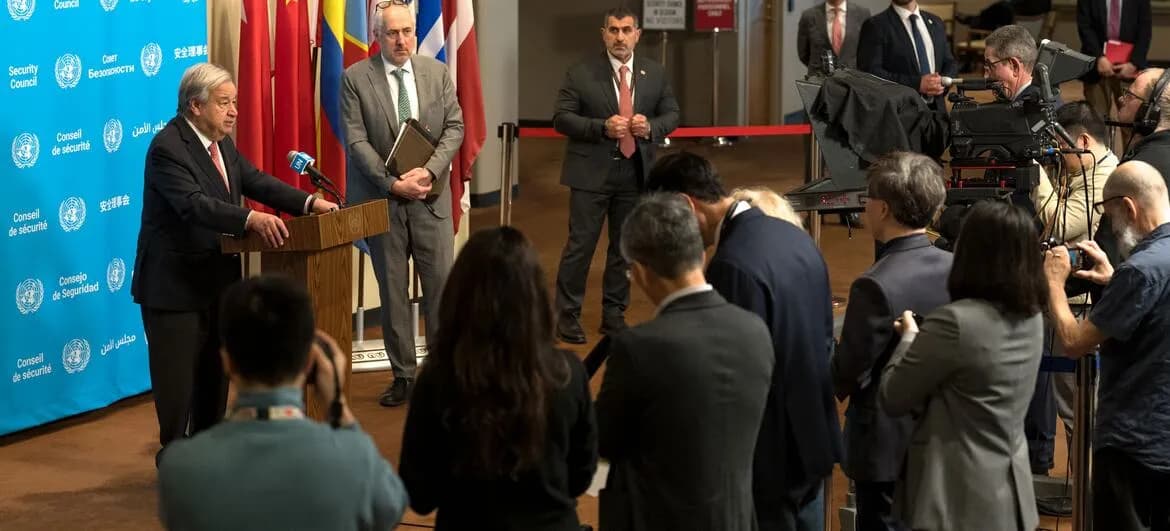
- •UN Secretary-General Guterres warned the world is on the edge of a wider war.
- •The threatened blockade of the Strait of Hormuz poses a severe risk to global energy supplies.
- •Despite diplomatic efforts, an immediate ceasefire remains unlikely without direct dialogue.
Middle East on the Brink of Escalation
UN Secretary-General António Guterres warned Thursday that the world stands 'on the edge of a wider war' as the Middle East conflict entered its second month. Speaking outside the Security Council in New York, he described a rapidly deteriorating situation where US and Israeli airstrikes on Iran continue while Tehran attacks neighboring Gulf States and threatens to blockade the Strait of Hormuz.
Why This War Is a Global Problem
Guterres stressed that the conflict is no longer a regional issue. The Strait of Hormuz — through which roughly 20% of the world's oil supply passes — is now under threat of closure. Should it be blockaded, energy-importing nations in Southeast Asia, South Asia, and Africa face devastating consequences. 'When the Strait of Hormuz is strangled, the world's poorest and most vulnerable cannot breathe,' he warned. Rising food and energy costs are already being felt in the Philippines, Sri Lanka, and Mozambique.
Diplomacy in Motion
The Secretary-General announced the dispatch of his Personal Envoy, Jean Arnault, to the region. The Security Council previously passed resolution 2817 (2026) demanding an immediate halt to Iranian attacks on Bahrain, Kuwait, Oman, Qatar, Saudi Arabia, the UAE, and Jordan. Assistant Secretary-General Khaled Khiari echoed the alarm, calling the situation a 'dangerous precipice,' while condemning attacks from all sides.
Guterres directly urged the United States and Israel to 'stop the war' and called on Iran to halt attacks on its neighbors. 'Conflicts do not end on their own. They end when leaders choose dialogue over destruction,' he said.
Implications for South Korea
South Korea, heavily dependent on Middle Eastern energy imports, faces significant economic exposure. A Strait of Hormuz closure could trigger surging oil prices, higher utility bills, and increased logistics costs. Korean construction firms operating in the region and the safety of Korean nationals abroad are also key concerns.
What Comes Next [AI Analysis]
Despite the envoy deployment and Security Council resolution, a comprehensive ceasefire is unlikely in the near term without a direct dialogue channel between the US-Israel coalition and Iran. If Iran follows through on its Strait of Hormuz threats, global energy markets could enter severe turbulence, potentially reigniting global inflation. The effectiveness of UN and Arab League mediation over the next several weeks will likely determine whether the conflict widens or stabilizes.
댓글 (4)
댓글란이 과열되지 않았으면 합니다. 차분한 논의가 필요해요.
이 사안은 신중하게 접근해야 한다고 봅니다.
차분한 논의가 필요하다는 말에 공감합니다.
이 문제의 본질이 무엇인지 깊이 생각해볼 필요가 있습니다.
More in Global
South Sudan Crisis Reaches 'Catastrophic' Level; WHO Updates Opioid Treatment Guidelines
Artemis 2 Launches First Crewed Moon Voyage in 52 Years
UN's Türk Slams 'Severe Restrictions' on Free Speech Across Middle East
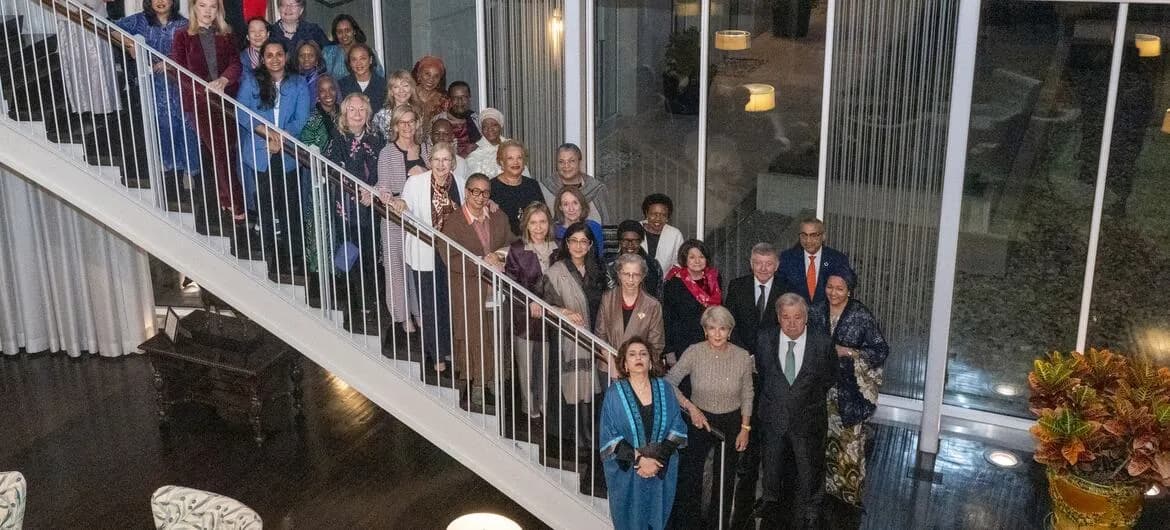
UN Women Leaders Unite to Defend Gender Equality Against Rising Global Backlash
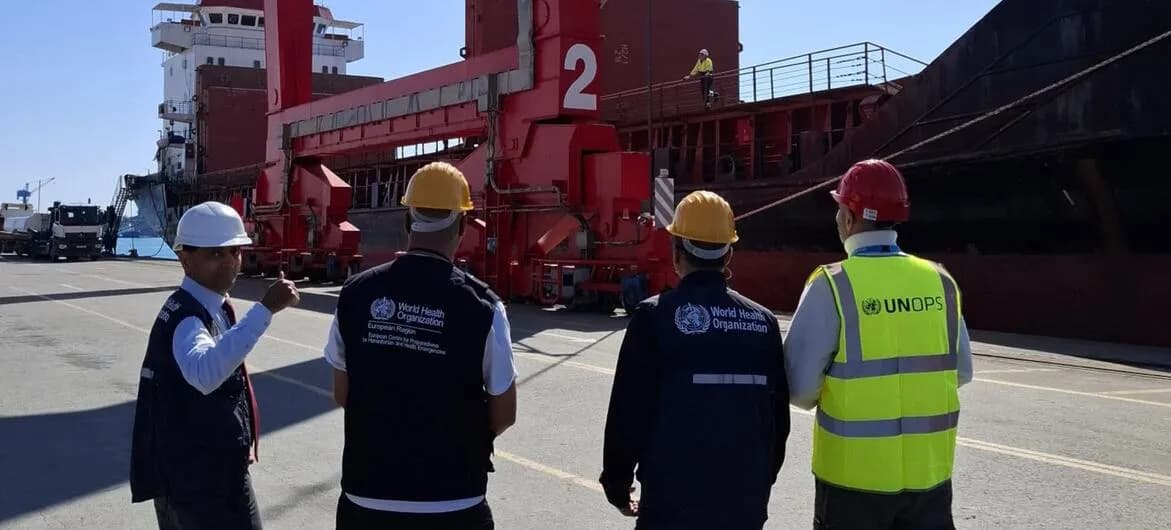
Breaking the Gaza Aid Bottleneck: 106-Tonne Shipment Arrives via New Sea Route

Brent Crude Oil Surges 63% in March—Largest Monthly Gain in 38 Years Since 1987
Latest News

Beyond Rocky: 17 Sci-Fi Aliens That Dared to Look Nothing Like Us
Rocky from 'Project Hail Mary' reignites interest in non-humanoid sci-fi aliens.

Langeliers Eyes Catcher Home Run History One Year After Raleigh's 60
Langeliers hits 5 HRs with a 1.400 OPS in his first six games of 2026.

MLB's Top Prospect Konnor Griffin Set to Debut in Pirates' Home Opener Friday
MLB's top-ranked prospect Konnor Griffin will debut in Pittsburgh's home opener Friday.

'The Scarecrow' Drops Main Trailer: Park Hae Soo, Lee Hee Joon, and Kwak Sun Young Unite to Chase a Serial Killer Across 30 Years
ENA's 'The Scarecrow' has released its main trailer.

Kim Sung Cheol Plays a Loan Company Schemer Closing in on Park Bo Young's Gold Bars in 'Gold Land'
Kim Sung Cheol takes on the role of Woo Gi, a scheming loan company employee, opposite Park Bo Young in Gold Land.

6 Pitchers Who Stole the Show in Their 2026 MLB Debuts
Six MLB pitchers delivered standout performances in their first starts of 2026.

Skenes Bounces Back with 5 Strong Innings, Pirates Down Reds 8-3
Paul Skenes earns first 2026 win with five innings of one-run ball

An Amateur Astrophotographer's 396-Hour Journey to Hollywood
An astrophotographer with just 2.5 years of experience had his nebula photos close out 'Project Hail Mary.'