Mark Bradford Tapped for Monumental Public Art at Obama Presidential Center
Guggenheim collection artist to fill three-story atrium wall in Chicago — center opens June 2026
- •Mark Bradford will create a three-story mural for the Obama Presidential Center in Chicago.
- •The work, 'City of the Big Shoulders,' maps Chicago through fragmentation and layered history.
- •The Guggenheim was among the first major museums to collect Bradford's work, in 2001.
A Wall in Chicago, a Career in Full
Mark Bradford, one of America's most prominent contemporary artists, has been selected to create a major public artwork for the Obama Presidential Center, set to open in Chicago in June 2026. According to reports from the arts community, the commission — titled City of the Big Shoulders — will occupy the entire three-story west wall of the Our Story Atrium in the center's Museum Building. Through fragmentation and shifting perspectives, the monumental painting maps Chicago as a city, compressing its layered history into a visual narrative shaped by pressure, power, survival, and hope.
Why This Work, Why Now
The Obama Presidential Center is more than a commemorative site. Located on Chicago's South Side, it was conceived as a cultural institution rooted in community connection. Bradford's selection reflects the deep social resonance of his practice.
Bradford systematically dismantles the conventional boundaries of painting. Working through collage and décollage — building up layers of paper, then tearing them back — he allows the material itself to carry meaning. His signature use of "merchant posters," advertising signs salvaged from small businesses in South Central Los Angeles, brings the everyday life of African American communities directly into the gallery. The Obama Center commission follows this same logic: Bradford translates the memory and geography of Chicago's Black community into physical form.
In the realm of public art, accessibility is everything. Work encountered by citizens who may never enter a museum becomes a form of civic speech. Placed within the charged historical and political atmosphere of the Obama Center, City of the Big Shoulders carries the potential to function as far more than decoration — as a catalyst for genuine public dialogue.
A Relationship Twenty-Five Years in the Making
Bradford's connection to major institutions stretches back a quarter century. In 2001, the Solomon R. Guggenheim Museum acquired his early signature work Daddy, Daddy, Daddy (2001) through the Young Collectors Council (YCC), a group of young professionals dedicated to building the museum's contemporary holdings. The YCC celebrates its thirtieth anniversary in 2026.
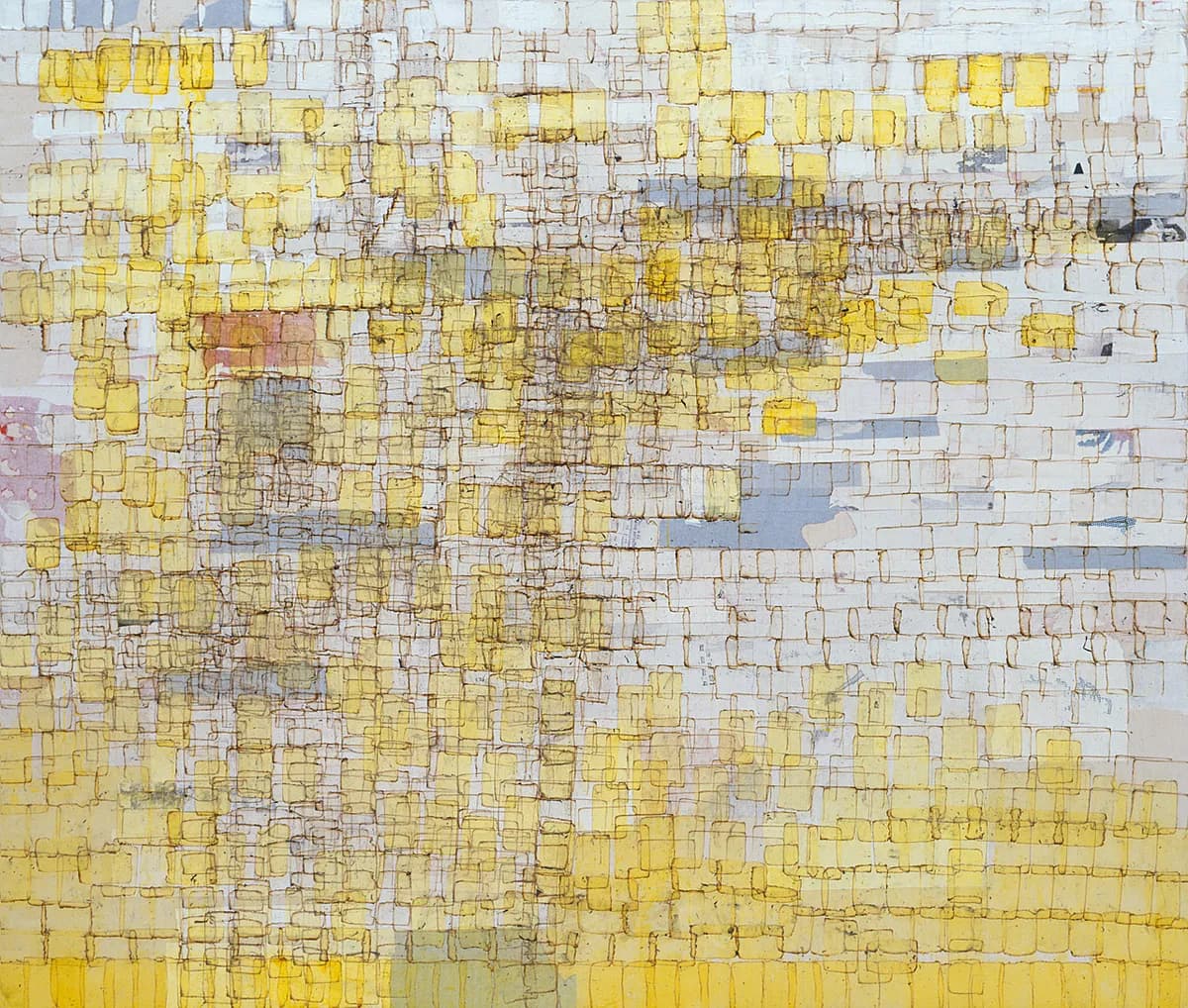
The six-by-seven-foot work is composed almost entirely of end papers — the thin, translucent sheets used to protect hair during styling, drawn from Bradford's years working as a hairdresser. He burned and layered each piece to create varying levels of saturation, punctuated with yellow and white paint, producing an imperfect all-over grid that simultaneously recalls Abstract Expressionism and Minimalism. The Guggenheim was among the first major museums to acquire Bradford's work — a fact that underscores the institution's role in shaping his career.
The museum followed up with a second acquisition, The Last Telegraph (2013), and featured both works in its 2024–25 exhibition By Way Of: Material and Motion in the Guggenheim Collection. From emerging artist to a figure who commands an entire chapter in American art history, Bradford's trajectory has been steady and significant.
Viewed in broader context, the early 2000s marked a turning point in American art institutions' engagement with African American artists — a shift in collection priorities that Bradford's rise exemplifies. The Obama Center commission represents the natural extension of that shift into public space.
What Comes Next [AI Analysis]
With the Obama Presidential Center opening in June 2026, City of the Big Shoulders will likely become one of the defining benchmarks of American public art in this era. What makes the commission particularly compelling is its contextual coherence: although Bradford did not grow up in Chicago or work there, his method — assembling fragments into a composite whole — resonates powerfully with a city whose identity is itself layered with contradictions and history.
The broader trend in public art commissioning is moving away from simply hiring prestigious names toward selecting artists whose work carries social weight and reflects local identity. Bradford's selection is likely to be cited as a model for this approach.
For the Guggenheim, 2026 also marks a moment of reflection. The convergence of the YCC's thirtieth anniversary and Bradford's high-profile commission invites institutions to reconsider the social role of their collections. The arc from early acquisition to major civic commission offers what may become a textbook example of how a museum can grow alongside an artist — and what it means when it does.
댓글 (4)
Mark 관련 기사 잘 읽었습니다. 유익한 정보네요.
공감합니다. 참고하겠습니다.
간결하면서도 핵심을 잘 정리한 기사네요.
그 부분은 저도 궁금했습니다.
More in Culture & Art

A Living Sculpture of Sound Transforms Guggenheim's Rotunda
국립중앙박물관, 19년 만에 유료 전환 추진
The poetics of concrete in communion with nature, Luciano Crook's 'Paula's House'
Film director and painter Oh Jeom-gyun holds an invitational exhibition ‘Spring Day is Coming’ at Gallery 0doC.
A combination of open space and private areas, hair extension salon by MAVA Design

Han Kang's 'Never Farewell' wins the National Book Critics Association Award... The first Korean novel
Latest News

Beyond Rocky: 17 Sci-Fi Aliens That Dared to Look Nothing Like Us
Rocky from 'Project Hail Mary' reignites interest in non-humanoid sci-fi aliens.
Langeliers Eyes Catcher Home Run History One Year After Raleigh's 60
Langeliers hits 5 HRs with a 1.400 OPS in his first six games of 2026.

MLB's Top Prospect Konnor Griffin Set to Debut in Pirates' Home Opener Friday
MLB's top-ranked prospect Konnor Griffin will debut in Pittsburgh's home opener Friday.
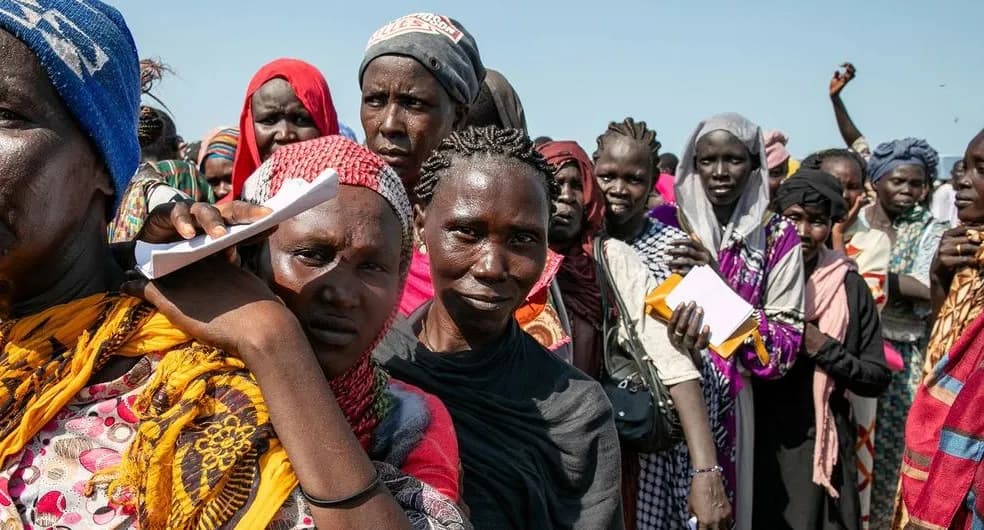
South Sudan Crisis Reaches 'Catastrophic' Level; WHO Updates Opioid Treatment Guidelines
UN experts warned that South Sudan has entered a catastrophic human rights and humanitarian crisis.
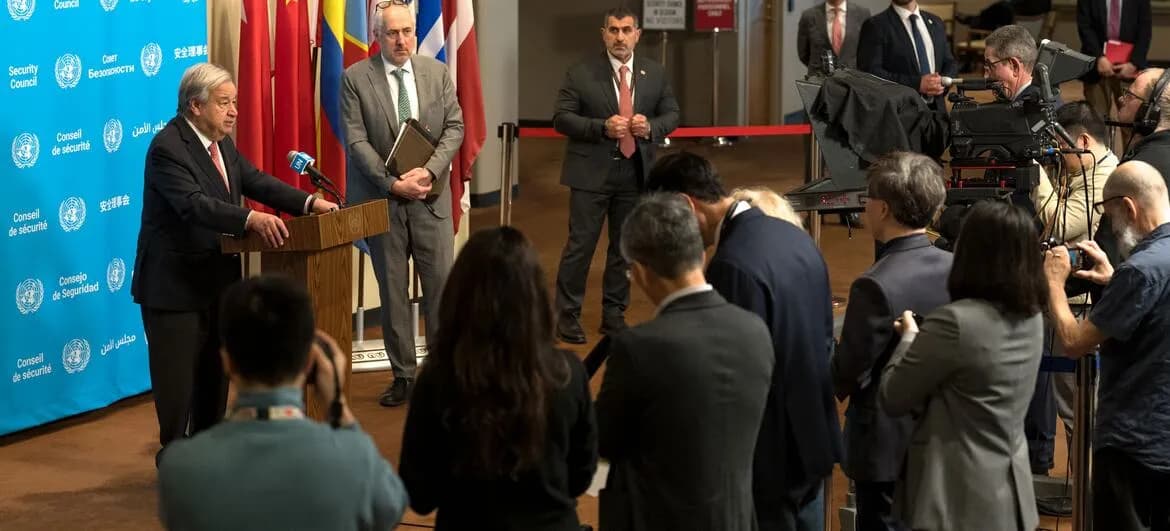
Guterres Warns of 'Wider War' as Middle East Conflict Enters Second Month
UN Secretary-General Guterres warned the world is on the edge of a wider war.

'The Scarecrow' Drops Main Trailer: Park Hae Soo, Lee Hee Joon, and Kwak Sun Young Unite to Chase a Serial Killer Across 30 Years
ENA's 'The Scarecrow' has released its main trailer.
Kim Sung Cheol Plays a Loan Company Schemer Closing in on Park Bo Young's Gold Bars in 'Gold Land'
Kim Sung Cheol takes on the role of Woo Gi, a scheming loan company employee, opposite Park Bo Young in Gold Land.
6 Pitchers Who Stole the Show in Their 2026 MLB Debuts
Six MLB pitchers delivered standout performances in their first starts of 2026.