UN Chief Warns of Imminent Full-Scale Middle East War as Three UNIFIL Peacekeepers Killed
Guterres dispatches personal envoy to region amid Strait of Hormuz warning; Indonesian soldiers honored posthumously
- •UN chief warns of imminent wider Middle East war, dispatches personal envoy.
- •Three Indonesian UNIFIL peacekeepers killed; posthumous honors awarded in Beirut.
- •IDF expands western Lebanon advance; Israeli flag near UN post sparks dispute.
UN Raises Alarm Over Full-Scale Middle East Conflict
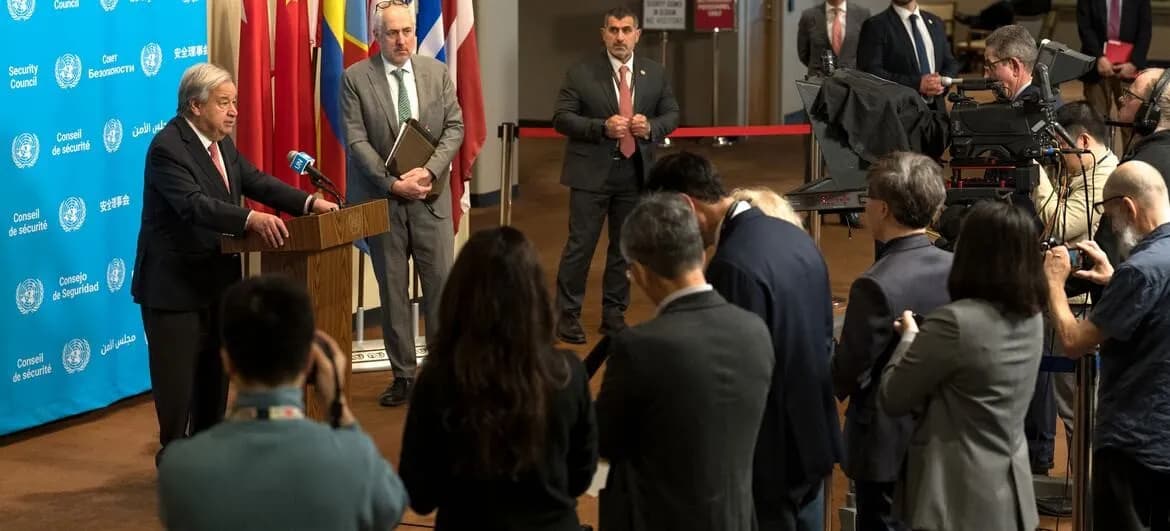
UN Secretary-General António Guterres issued a stark warning on Friday, declaring that the world stands "on the edge of a wider war that would engulf the whole Middle East" as the conflict entered its second month. He announced the immediate dispatch of his Personal Envoy, Jean Arnault, to the region to pursue diplomatic solutions.
Meanwhile, the UN Interim Force in Lebanon (UNIFIL) confirmed the deaths of three Indonesian peacekeepers — Corporal Farizal Rhomadon, Major Zulmi Aditya Iskandar, and First Sergeant Muhammad Nur Ichwan — killed in two separate incidents on March 29 and 30. A solemn ceremony was held at Beirut International Airport, where all three were posthumously awarded UNIFIL and Lebanese Armed Forces medals.
The Strait of Hormuz: When Geopolitics Hits the Poorest
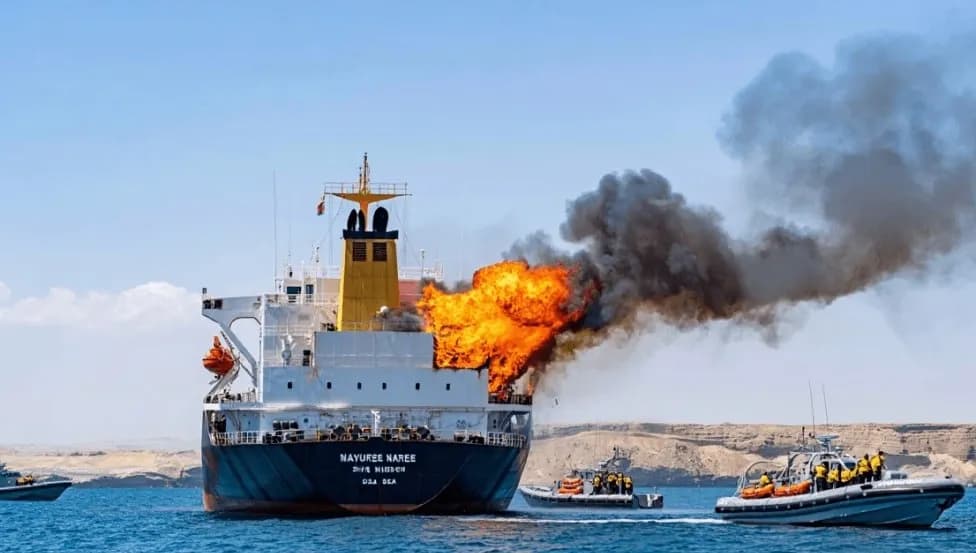
Guterres's pointed reference to the Strait of Hormuz underscores the conflict's potential global economic fallout. Roughly 20% of global oil exports and 25% of LNG shipments pass through this narrow waterway. Should it be disrupted, the heaviest blow would fall not on wealthy energy consumers but on import-dependent developing nations.
"When the Strait of Hormuz is strangled, the world's poorest and most vulnerable cannot breathe," Guterres stated — a warning that links energy security directly to humanitarian crisis. This is not mere rhetoric; it reflects scenarios already being tracked by the UN Office for the Coordination of Humanitarian Affairs (OCHA).
On the ground, UNIFIL reports continuing rocket fire toward Israel alongside Israeli airstrikes and artillery strikes across southern Lebanon. The Israel Defense Forces (IDF) have expanded their ground incursion westward, with tanks reported approximately 12 kilometers north of the Blue Line.
UNIFIL Faces Its Most Dangerous Period in Decades
UNIFIL was established in 1978 following Israel's first invasion of Lebanon. For most of its 46-year history, it managed relatively limited casualties — but its mandate expanded significantly after the 2006 Second Lebanon War.
The roots of the current crisis trace back to October 2023, when Hezbollah opened a "solidarity front" with Hamas following the Gaza war. What remained a low-intensity conflict through 2024 has escalated into full-scale operations, with Israel launching major retaliatory strikes and ground incursions in 2025.
A new flashpoint emerged this week when the IDF erected an Israeli flag near a UN position in Kafer Kela. UNIFIL immediately demanded its removal, warning that the flag undermines the force's perceived impartiality and could draw fire toward peacekeepers. Separately, a peacekeeper was wounded in the shoulder by a stray bullet near Meiss Jebel amid clashes between Hezbollah and the IDF.
Outlook [AI Analysis]
Arnault's upcoming shuttle diplomacy signals that the window for a negotiated solution has not entirely closed — but its effectiveness against the Iran-Israel-Hezbollah triangle remains uncertain.
Several scenarios warrant close attention. First, if IDF advances continue toward western UNIFIL sectors, direct physical confrontation with UN forces becomes increasingly likely, potentially internationalizing the conflict in ways that international law has long sought to prevent.
Second, any blockade or near-blockade of the Strait of Hormuz could trigger cascading energy and food price shocks, with South Asian and African economies facing particularly severe exposure.
Third, the deaths of Indonesian peacekeepers may test troop-contributing countries' resolve to maintain deployments. A withdrawal of forces could collapse the buffer function in southern Lebanon, further destabilizing the front.
Guterres's public demand that the US and Israel "stop the war" marks an unusually direct tone for a UN Secretary-General. Whether that message translates into policy shifts may hinge largely on the outcome of Arnault's diplomatic mission in the coming days.
댓글 (2)
UN 소식 정말 안타깝습니다. 유가족분들께 깊은 위로를 전합니다.
이런 일이 다시는 반복되지 않았으면 합니다. Chief 관련 대책이 시급합니다.
More in Global
'We Watched Them Die': Sudan's Last Maternity Hospital on the Brink

Deminers Struggle to Keep Pace as Smart Mines Rewrite the Rules of War

Artemis 2 Departs for the Moon — First Crewed Lunar Mission in 52 Years
South Sudan Crisis Reaches 'Catastrophic' Level; WHO Updates Opioid Treatment Guidelines
Guterres Warns of 'Wider War' as Middle East Conflict Enters Second Month
Hormuz Closure Lays Bare the World's Fossil Fuel Dependency
Latest News

Yoo Yeon Seok and Esom Share Charged Amusement Park Moment in 'Phantom Lawyer' Episode 8
Episode 8 of 'Phantom Lawyer' previews an emotional amusement park scene between the two leads.

Coma Survivor Returns to Shake Up the Fragile Alliance in 'Mad Concrete Dreams'
Min Hwal Seong wakes from a coma and approaches Kim Seon at a dinner party.

Shiloh Jolie to Appear in WJSN Dayoung's MV — STARSHIP Says They Didn't Know Who She Was
Shiloh Jolie appeared as a dancer in Dayoung's solo MV teaser.

Han Ji Min Moves In With Park Sung Hoon After Falling Out With Her Mom in 'The Practical Guide to Love'
Lee Ui Yeong (Han Ji Min) moves into Song Tae Seop's home after a fight with her mother.

10 Nasty New Pitches to Watch in the 2026 MLB Season
Over 10 MLB pitchers debuted new or significantly altered pitches in the first week of 2026.

CORTIS Shatters Own Record With 1.2 Million Stock Pre-Orders for 'GREENGREEN'
CORTIS's comeback album 'GREENGREEN' has surpassed 1.22 million stock pre-orders.

He Pondered Retirement. Now He's Hit His First Grand Slam.
Tristan Gray made the Twins' Opening Day roster the day after discussing retirement with his wife.

DeLauter Hits 5th Homer in 7 Games, Ties MLB History
DeLauter went 3-for-4 with a decisive two-run homer in Cleveland's home opener.