Hormuz Closure Lays Bare the World's Fossil Fuel Dependency
One month into Middle East conflict, a fifth of global oil supply stalled — UN calls for urgent shift to renewables
- •The Hormuz closure has cut off a fifth of global energy supply.
- •The UN warns fossil fuel dependence threatens both climate and security.
- •Countries like South Korea face growing pressure to accelerate the renewable energy transition.
When the Persian Gulf Stopped, the World Economy Shook
One month after conflict erupted among Iran, the United States, and Israel, the Strait of Hormuz — through which one fifth of the world's oil and gas supply passes — has been effectively closed to shipping. As vessel traffic halted, fossil fuel supplies to countries worldwide dwindled, and energy prices surged, rattling global financial markets. The United Nations has declared the crisis a stark demonstration of energy security's fragility, urging nations to accelerate the transition to renewable power.
Why This Crisis Matters
Concerns over fossil fuels have traditionally centered on climate change — the greenhouse gases released when fuels are burned accelerating global warming. But the Middle East crisis has thrust a second dimension into the foreground: energy security as a geopolitical vulnerability.
UN Secretary-General António Guterres warned earlier this year that "in this age of war, our addiction to fossil fuels is destabilizing both the climate and global security." The current crisis proves that warning was no mere rhetoric.
The conflict has simultaneously exposed three structural vulnerabilities. First, major oil and gas reserves are concentrated in regions prone to geopolitical conflict. Second, military escalation can sever critical shipping lanes at any time. Third, energy price shocks spread across borders instantaneously. The UN argues the bottleneck demands a fundamental reconceptualization of energy security — supply volume alone is no longer sufficient. Resilience — the capacity to withstand conflict, climate disruption, and infrastructure shocks — has emerged as the defining metric.
From Hormuz to Seoul: A History of Energy Dependency
The Strait of Hormuz has long been identified as the narrowest chokepoint in the global energy system. The overwhelming majority of crude oil and liquefied natural gas (LNG) exported by Persian Gulf producers transits this strait. The oil shocks of the 1970s already demonstrated how Middle Eastern instability could deliver devastating blows to the world economy.
Following the U.S. shale revolution in the 2000s and the expansion of renewables, the energy landscape appeared to be diversifying — yet most countries remain deeply dependent on Middle Eastern fossil fuels. South Korea, which sources more than 70% of its crude imports from the Middle East, sits squarely within the impact zone of the current crisis.
The transition conversation accelerated after the 2015 Paris Agreement and gained new urgency after Russia's 2022 invasion of Ukraine, which pushed Europe into an energy security emergency and elevated decarbonization and energy independence as twin strategic imperatives. Yet the pace of transition remains slow. According to the International Energy Agency (IEA), renewables accounted for just over 30% of global energy consumption in 2025, with the remaining 70% still supplied by fossil fuels.
What Comes Next [AI Analysis]
The Hormuz closure is unlikely to end as a short-term price shock. It stands a high probability of becoming an inflection point in global energy policy. Several scenarios merit attention.
Accelerated Renewable Investment: The longer the conflict persists, the more likely governments are to substantially increase investment in domestically producible energy sources — solar, wind, and others. Two powerful rationales reinforce each other: energy security and climate action.
South Korea's Dilemma: South Korea faces mounting pressure between its stated commitment to the energy transition and its structural dependence on Middle Eastern fossil fuels. Diversifying energy imports alongside scaling domestic renewable infrastructure is likely to be elevated as a national security imperative.
Rising Geopolitical Risk Premiums: As Middle Eastern risk becomes structural, a geopolitical risk premium embedded in oil and LNG prices is likely to become a permanent feature of markets. Paradoxically, this strengthens the cost competitiveness of renewables.
Expanded UN Role: The UN is likely to leverage this crisis to intensify multilateral dialogue on energy transition. Energy security has moved beyond economics and is now firmly a peace and security agenda item.
Even when the guns fall silent, the lessons of this crisis will not be easily forgotten. The geopolitical vulnerability of fossil fuels is now a lived reality, and the energy transition is being redefined — not as an environmental aspiration, but as a survival strategy.
댓글 (5)
간결하면서도 핵심을 잘 정리한 기사네요.
그 부분은 저도 궁금했습니다.
Closure 관련 기사 잘 읽었습니다. 유익한 정보네요.
공감합니다. 참고하겠습니다.
Lays에 대해 더 알고 싶어졌습니다. 후속 기사 부탁드립니다.
More in Global
Artemis 2 Departs for the Moon — First Crewed Lunar Mission in 52 Years
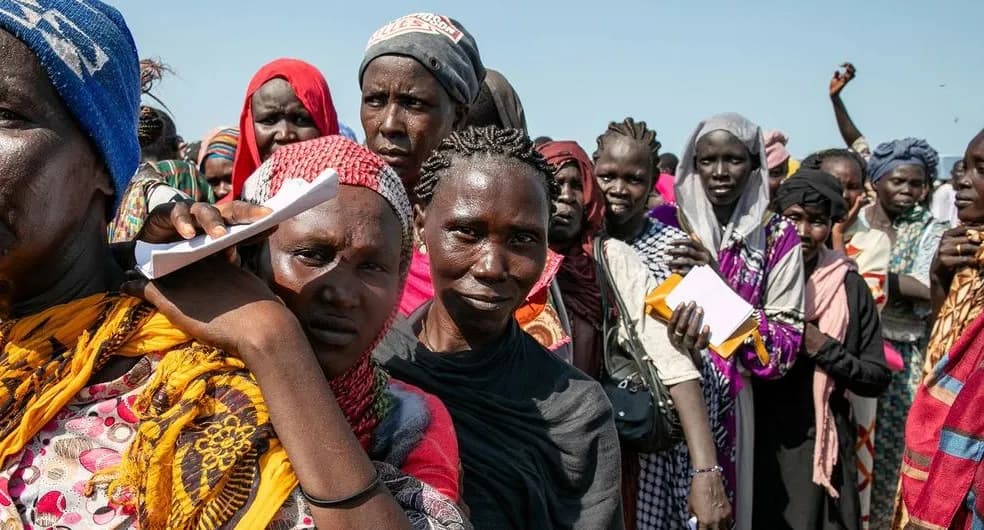
South Sudan Crisis Reaches 'Catastrophic' Level; WHO Updates Opioid Treatment Guidelines
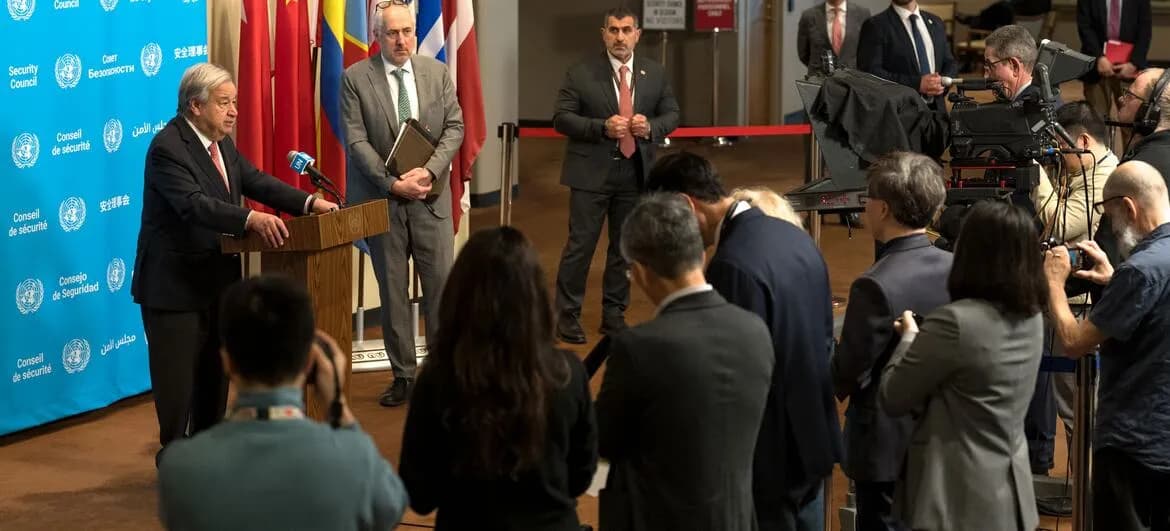
Guterres Warns of 'Wider War' as Middle East Conflict Enters Second Month
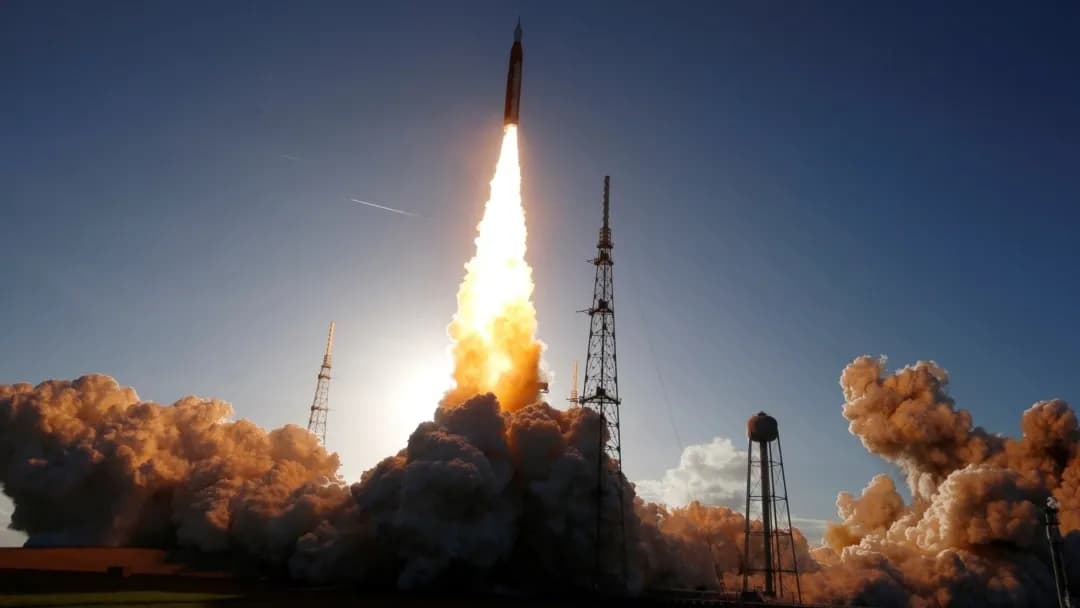
Artemis 2 Launches First Crewed Moon Voyage in 52 Years

UN's Türk Slams 'Severe Restrictions' on Free Speech Across Middle East

UN Women Leaders Unite to Defend Gender Equality Against Rising Global Backlash
Latest News
Park Bo Young And Lee Kwang Soo To Appear On Season 4 Finale Of 'Whenever Possible'
Park Bo Young and Lee Kwang Soo will guest on the Season 4 finale of 'Whenever Possible.'
'Bloodhounds 2' Premieres on Netflix with Woo Do Hwan, Lee Sang Yi, and Rain
Bloodhounds Season 2 premiered on Netflix on April 3.
DJI Avata 360 Review: Setting a New Standard for 360-Degree Drones
DJI Avata 360 combines cinewhoop FPV design with dual 64MP sensors for 8K 360-degree video.
Breaking: Mark Parts Ways with NCT and SM Entertainment After 10 Years
Mark will end his exclusive contract with SM Entertainment on April 8.
Zhang Hao, Ricky, Kim Gyu Vin, Han Yu Jin & Yoo Seung Eon Confirmed as AND2BLE
AND2BLE confirmed as 5-member group debuting in May 2026.

ABS Challenge System: How Well Did Players Optimize in Week One?
In MLB's first week of ABS Challenges, 2-2 count usage was solid, but 0-0 challenges were too frequent.

Royals Prospect Jensen Scratched After Oversleeping, Vows to 'Set a Million Alarms'
Royals top prospect Jensen was scratched from the lineup after oversleeping before a day game.
MLB 2026 Prospect Tracker: No. 1 Konnor Griffin Called Up After Just 5 Triple-A Games
No. 1 prospect Konnor Griffin was called up after just 5 Triple-A games.