Lebanon at 'Breaking Point': 1,240 Dead and 1.1 Million Displaced in Four Weeks
UN Emergency Relief Coordinator urges Security Council to take 'collective action' as peacekeepers are killed and funding falls short
- •UN coordinator reports 1,240 killed and 1.1 million displaced in Lebanon over four weeks.
- •Three Indonesian UNIFIL peacekeepers killed, prompting emergency Security Council session.
- •South Korea's Dongmyeong Unit is deployed with UNIFIL, raising concerns over troop safety.
UN Warns: 'Act Now or Face an Even Worse Crisis'
UN Emergency Relief Coordinator Tom Fletcher delivered an urgent briefing to the Security Council from Beirut on March 31, 2026, warning that Lebanon has reached a "breaking point." Over the past four weeks, more than 1,240 people have been killed and 3,500 injured, while over 1.1 million have been displaced — including hundreds of thousands of children. Among the dead are women, children, and first responders.
Fletcher described finding "anxiety and tensions at levels I have not witnessed in many years," as airstrikes and drone activity continue to rock the capital. He called on Security Council members to take "collective action" to prevent an even worse catastrophe.
A Cycle of Coercive Displacement
Israeli strikes have devastated southern Lebanon, Beirut's southern suburbs, and the Bekaa Valley, while rockets continue to be fired into northern Israel. Entire villages have been flattened, and most bridges south of the Litani River have been destroyed. Hospitals have closed, schools have become shelters, and communities are growing increasingly isolated.
Of a $308 million emergency appeal, only $94 million — roughly 30% — has been received. Fletcher stressed that international humanitarian law demands distinction, proportionality, and precaution, and that healthcare, water, and electricity infrastructure must never be targeted.
Peacekeeper Deaths Trigger Emergency Session
France called the emergency Security Council session after three Indonesian peacekeepers serving with UNIFIL were killed — and several others seriously wounded — in two separate incidents within a single 24-hour period. UN peacekeeping chief Jean-Pierre Lacroix said: "These tragic developments should not have happened."
South Korea's Dongmyeong Unit is also deployed with UNIFIL, making this crisis directly relevant to Seoul. Repeated attacks on peacekeepers raise urgent questions about the safety of all contributing nations' forces.
A Cycle That Repeats: Lebanon's Long History of Conflict
Lebanon has endured decades of cyclical violence. The 1975–1990 civil war claimed approximately 150,000 lives. Armed clashes with Israel recurred in 1978, 1982, 1993, 1996, and most dramatically in the 34-day war of summer 2006, which killed over 1,200 Lebanese civilians and displaced more than one million people.
UN Security Council Resolution 1701, adopted after the 2006 war, called for Hezbollah's withdrawal north of the Litani River and the deployment of Lebanese forces and UNIFIL in the south — but implementation remained incomplete. When the Israel-Hamas war erupted in October 2023, Lebanon's southern front reignited. By 2026, the conflict has escalated to its worst level since 2006.
What Comes Next [AI Analysis]
If current trends continue, the humanitarian situation in Lebanon is likely to deteriorate further in the near term. With most bridges south of the Litani already destroyed, a full blockade of supply routes could push southern communities into complete isolation.
The prospects for a binding Security Council resolution remain uncertain, given the risk of vetoes among permanent members. Without international consensus, Fletcher's appeal may remain symbolic.
The killing of Indonesian peacekeepers has raised serious questions about UNIFIL's ability to continue its mission. If contributing nations consider withdrawing forces over safety concerns, the buffer role that UNIFIL plays could collapse — a scenario that would also affect South Korea's Dongmyeong Unit.
In the long run, external military or humanitarian intervention alone is unlikely to resolve the crisis without addressing Lebanon's deep political vacuum. Fletcher's appeal — "Don't give up on the idea of Lebanon" — is a reminder that what is at stake is not just a ceasefire, but the viability of a nation.
댓글 (3)
이 위기를 어떻게 극복할 수 있을지 전문가 의견이 더 필요합니다.
경제 상황이 좋지 않은데, 정부의 대응이 아쉽습니다.
이 부분은 저도 주시하고 있습니다.
More in Global
Artemis 2 Departs for the Moon — First Crewed Lunar Mission in 52 Years
South Sudan Crisis Reaches 'Catastrophic' Level; WHO Updates Opioid Treatment Guidelines
Guterres Warns of 'Wider War' as Middle East Conflict Enters Second Month
Hormuz Closure Lays Bare the World's Fossil Fuel Dependency
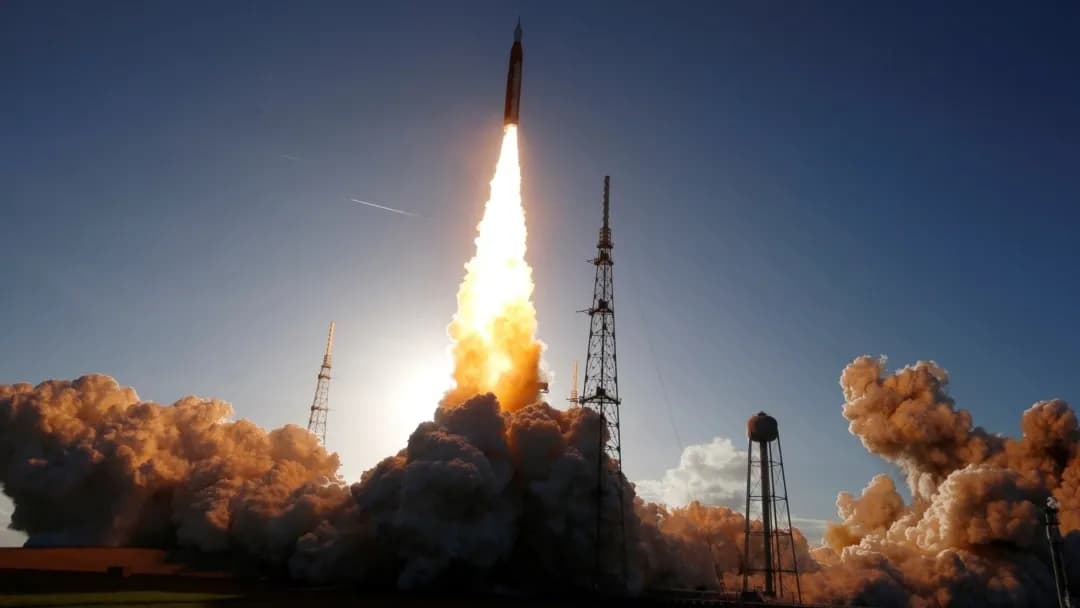
Artemis 2 Launches First Crewed Moon Voyage in 52 Years
UN's Türk Slams 'Severe Restrictions' on Free Speech Across Middle East
Latest News
Park Bo Young And Lee Kwang Soo To Appear On Season 4 Finale Of 'Whenever Possible'
Park Bo Young and Lee Kwang Soo will guest on the Season 4 finale of 'Whenever Possible.'
'Bloodhounds 2' Premieres on Netflix with Woo Do Hwan, Lee Sang Yi, and Rain
Bloodhounds Season 2 premiered on Netflix on April 3.
DJI Avata 360 Review: Setting a New Standard for 360-Degree Drones
DJI Avata 360 combines cinewhoop FPV design with dual 64MP sensors for 8K 360-degree video.
Breaking: Mark Parts Ways with NCT and SM Entertainment After 10 Years
Mark will end his exclusive contract with SM Entertainment on April 8.
Zhang Hao, Ricky, Kim Gyu Vin, Han Yu Jin & Yoo Seung Eon Confirmed as AND2BLE
AND2BLE confirmed as 5-member group debuting in May 2026.

ABS Challenge System: How Well Did Players Optimize in Week One?
In MLB's first week of ABS Challenges, 2-2 count usage was solid, but 0-0 challenges were too frequent.

Royals Prospect Jensen Scratched After Oversleeping, Vows to 'Set a Million Alarms'
Royals top prospect Jensen was scratched from the lineup after oversleeping before a day game.
MLB 2026 Prospect Tracker: No. 1 Konnor Griffin Called Up After Just 5 Triple-A Games
No. 1 prospect Konnor Griffin was called up after just 5 Triple-A games.